Posts

Parenting and autonomy and relatedness

Image
Parenting style affects how autonomous and related children will feel. Self-determination theory has shown that individuals, throughout their lives, have needs for autonomy, competence and relatedness. Simply put, the more their needs are fulfilled, the better individuals feel and function. Past research has shown that the degree to which parent support the fulfillment of these needs the more adapted and well-functioning their children will tend to become ( read more ). When parents use an authoritative and controlling parenting style, their children's development is likely to be hampered to some degree. Examples of such a controlling parenting style are: use of controlling language, emphasis on punishment ànd reward, use of threats, arousing guild and anxietym and using contingent parental regard and affection.

Raising kids to become autonomous individuals

Image
The importance of autonomous functioning As research into self-determination theory has shown there is a strong connection between people’s autonomous functioning and their wellness, their open, engaged and healthy functioning. When people feel autonomous they feel they can make their own choices and follow their own preferences. This does not mean they will be selfish, over individualistic, or self-sufficient. In fact, under good enough conditions, people will actively attempt to internalize and integrate the norms, rules and values of their environment, in other words make them their own. This process of internalizing and integrating external norms, rules and values will happen best 1) when they are transmitted in an autonomy supportive rather than a controlling way, and 2) when these norms, rules and values are congruent with the basic psychological needs for autonomy, competence, and relatedness (Ryan & Deci, 2011).

Rethinking Positive Thinking by Gabriele Oettingen

Image
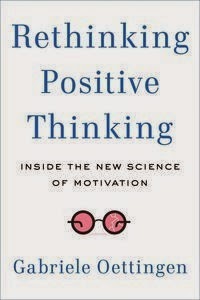
In a new book, Rethinking Positive Thinking: Inside the New Science of Motivation , Gabriele Oettingen of NYU summarizes twenty years of research she has done together with her collaborators. This research has focused on the functions and effects of positive fantasies and of a technique called mental contrasting.

Progress-focused summarizing

Image
Progress-focused professionals often summarize what their conversation partners have said. The summary is spoken in what is sometimes called a tentative tone . This means that the tone is not firm and assertive but it is as if there is a little question mark at the end of each sentence. This makes it easier for the conversation partner to feel free to make any corrections, if needed, to the summary.

Strengthening your prefrontal cortex

Image
In his book The Marshmallow Test , Walter Mischel describes how the capability of children and adults to exercise self-control has a big impact on their lives. Individuals who are capable of delaying gratification and resist temptations are better capable of focusing on achieving long-term goals. They fare better in many ways than individuals who are less able to exercise self-control. Two brain systems play an important role in succumbing to or retsisting temptations.

The 10-minute rule

Image
Brain scientist John Medina wrote the bestseller Brain Rules: 12 Principles for Surviving and Thriving at Work, Home, and School (2008). The book described 12 rules which we can use to organize our work and life in ways that fit the way our brains work. A rule which interested me and which I remember clearly (I read the book in 2008) is rule 4: " We don't pay attention to boring things " en in particular one aspect of that rule which is the 10-minute rule .

Having to explain helps learning

Image
Have you ever experienced that explaining things to others can be a learning experience for yourself, too? That is a bit paradoxical, isn't it? Our basic idea is that the person to whom the material is explained is the person who is supposed to learn from the process. But if you consider the situation more closely it is not so strange after all that the person who does the explaining also learns.

The Marshmallow Test by Walter Mischel

Image
Walter Mischel is a 84 year old professor at Columbia University. He is the author of a fascinating new book called The Marshmallow test . Mischel became known at the end of the 1960s, mainly through his publications about two topics. The first topic was the degree to which situations influence human behavior. He did research which showed that the idea that people have stable personality traits which cause us to behave consistently over many situations is largely a myth. Instead, he demonstrated, we tend to behave quite differently in different contexts. Thus, characteristics of situations have a significant influence on how we behave. The second topic was self-control. Together with colleagues he did much research into the causes and consequences of self-control, in particular with regard to how children manage to delay gratification. The series of experiments which these researchers did have become know under the popular name of the Marshmallow test , hence the book title.

If-then planning

Image
If-then planning is a technique which helps to perform specific goal-oriented behavior in situations in which it is most needed. Many people know the phenomenon that we often don't do what we wish or need to do (this is sometimes referred to as the knowing-doing gap). The problem is that while we do know what we want to achieve and we also know which behavior is effective, at the crucial moment we still fail to perform the behavior.The reason we fail to behave effectively at the critical moment may have to do with letting our emotions overwhelm us or succumbing to temptations or simply forgetting about the effective behavior when we need it.

Autonomy-support in the classroom

Image
George, a high school teacher, looked into the classroom of his colleague Bill and saw, to his amazement, that the students of the class, which had a reputation of being a very difficult class, were quietly working. At lunch break he asked Bill with a surprized smile: "How did you get them to do that, man? I get nothing but trouble from this class. I see no other solution than to get really tough with them. That'll teach them!" Bill smiled and then explained how he used the principle of autonomy-support in his classroom and he said this worked rather well. He explained that this meant, among other things, to provide many choices for students, taking students' feelings and opinions quite seriously, and avoiding controlling language. When he heard that, George said: "That sounds rather naive of you. If you do that they will walk right over you!"

The curse of knowledge

Image
Often things aren't just good or bad. Here are five examples: (1) solutions for problems can create new, often unexpected, problems, (2) good traits of a person can arouse envy in others, (3) what can be a strength in one situation can be a weakness in another, (4) the fact that you have achieved success feels good but can decrease your motivation to make further progress, and (5) having much knowledge about a topic can be pleasant but can create some difficulties in the communication with others. I want to say a few things about this last example which is related to a phenomenon known as the curse of knowledge (Loewenstein & Weber, 1989).

Mentioning ethnicity in performance situations: two downsides

Image
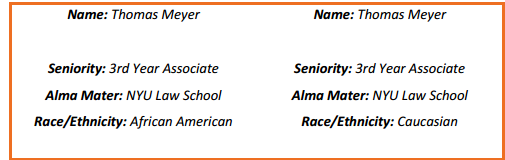
When people have to take a test for an application they are often asked to mention their race or ethnicity by ticking a box. Personally, I am skeptical about both the meaningfulness and the usefulness of  categorizing people in such a way and I think it is likely to do more harm than good. In my view it not only is likely to harm the performance but also is likely to distort the process of assessing the performance. I'll explain.

How different types of motives affect performance and growth

Image
Amy Wrzesniewski and Barry Schwartz have written an opinion piece in the New York Times about effective motivation ( read here ). In the piece they distinguish two types of motivation: internal motivation and instrumental motivation. These terms correspond two other terms which are more well-known in the psychological literature. Internal motivation corresponds to autonomous motivation; instrumental motivation corresponds to controlled motivation. They did a study to examine how these two types of motivation affected performance ( Wrzesniewski  et al (2014 ).

Rationality taxonomy

Image
When I interviewed  Keith Stanovich  in 2009, he explained that intelligence tests are not good measures of good thinking because they do not assess the extent of rational thought. His research had shown that intelligence test scores, at best, only mildly predicted rational thinking an that some rational thinkin skills are totally dissociated from intelligence. Later in the same interview he said he had started to sketch out a framework for the assessment of rational thought. As a recent publication by Toplak, West, & Stanovich (2013) shows, there is now such a framework:

r>g

Image
Thomas Piketty, author of Capital in the Twenty-First Century Until 2010, I did not know much about the consequences of economic inequality. Then I came across the book The Spirit Level in which the authors Richard Wilkinson and Kate Pickett presented their research results which showed that high levels of inequality in societies is harmful for everyone within them. Their research showed that (1) the more developed a country is, the less important further economic growth is for certain objectively measurable outcomes, like life expectancy ( see graph ), (2) in a study of 23 of the richest countries there was a strong relationship between health and social problems and the level of income inequality ( see graph ), (3) in a study of the 50 American States this same relationship was found ( see graph ).

Progress-Focused Directing

Image
Progress-focused directing is a technique which we developed around 2005. It can sometimes be quite useful for managers, teachers, and parents. It can be used in situations in which individuals have to conform to certain rules or have to accomplish goals. The approach is intended to help individuals understand what the rule or goal is and why it is important and to activate them to start finding their own ways to make progress in the desired direction. When do you use it? This type of providing direction fulfills two kinds of functions: (1) clarifying expectations, (2) setting limits. Clarifying expectations is an important part of managing, teaching and raising kids. Anyone who is part of a social system (a society, an organization, a school, a family) has to adapt to and to some degree conform to certain expectations in order to function and develop well and to make a valuable contribution.

The tilt intervention for working with involuntary clients

Image
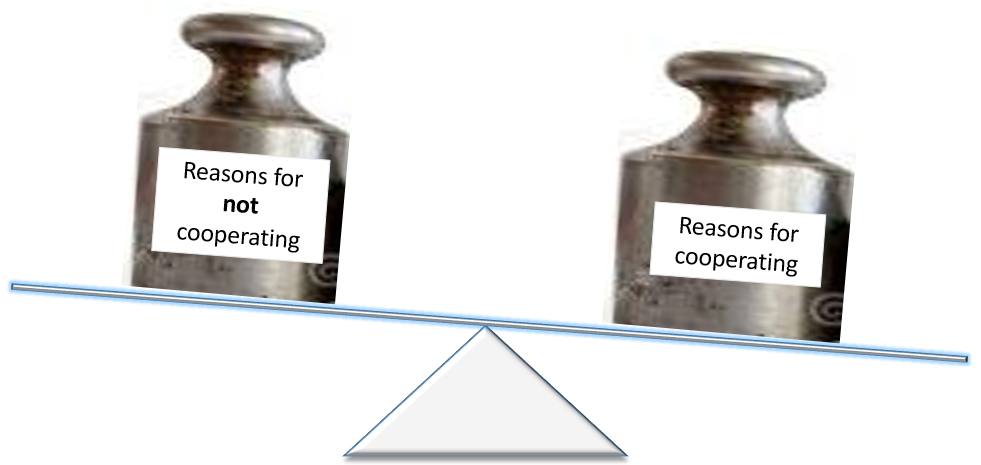
In coaching, supporting the autonomy of clients is extra important with involuntary clients. Involuntary clients are clients who's own idea it wasn't to go to a coach but who were sent by someone else. Although these clients may at first be reserved or uncooperative it is usually possible to reach a good cooperation with them rather fast. The key to doing that is to recognize their perspective and to acknowledge and accentuate their autonomy.

Interests as drivers of competence development

Image
Coert Visser (2014) Competence development is important for individuals and organizations. This article outlines the advantages of interest-focused development which is to structurally engage yourself with and train yourself in what interests you, both in the short and the long term. Interest-focused development An important motivation of people is what psychologists call competence motivation (Elliott & Dweck, 2005). Competence motivation is the tendency of people to make efforts to retain their level of competence and to develop it further. People from all cultures and of all ages have this motivation. The extent to which people feel competent contributes to their well-being and their functioning. Competence development will not come about automatically; it requires an investment. For anyone who wants to become more competent, the question is therefore important how that investment can be made most wisely.

Autonomy support at work

Image
Self-determination theory (SDT) is one of the most powerful frameworks to understand how human flourishing can develop. Here is a very brief recap of what it is*. SDT assumes two things about human beings: 1) that they are naturally active and growth-oriented, and 2) that they have a tendency toward psychological integration . This second process means that, as people encounter new experiences, they are challenged to integrate them with existing aspects of themselves. This process of integration leads individuals to develop increasingly complex self-structures in which values and regulatory processes from outside are internalized.

Using social network incentives to stimulate engagement, trust and results

Image
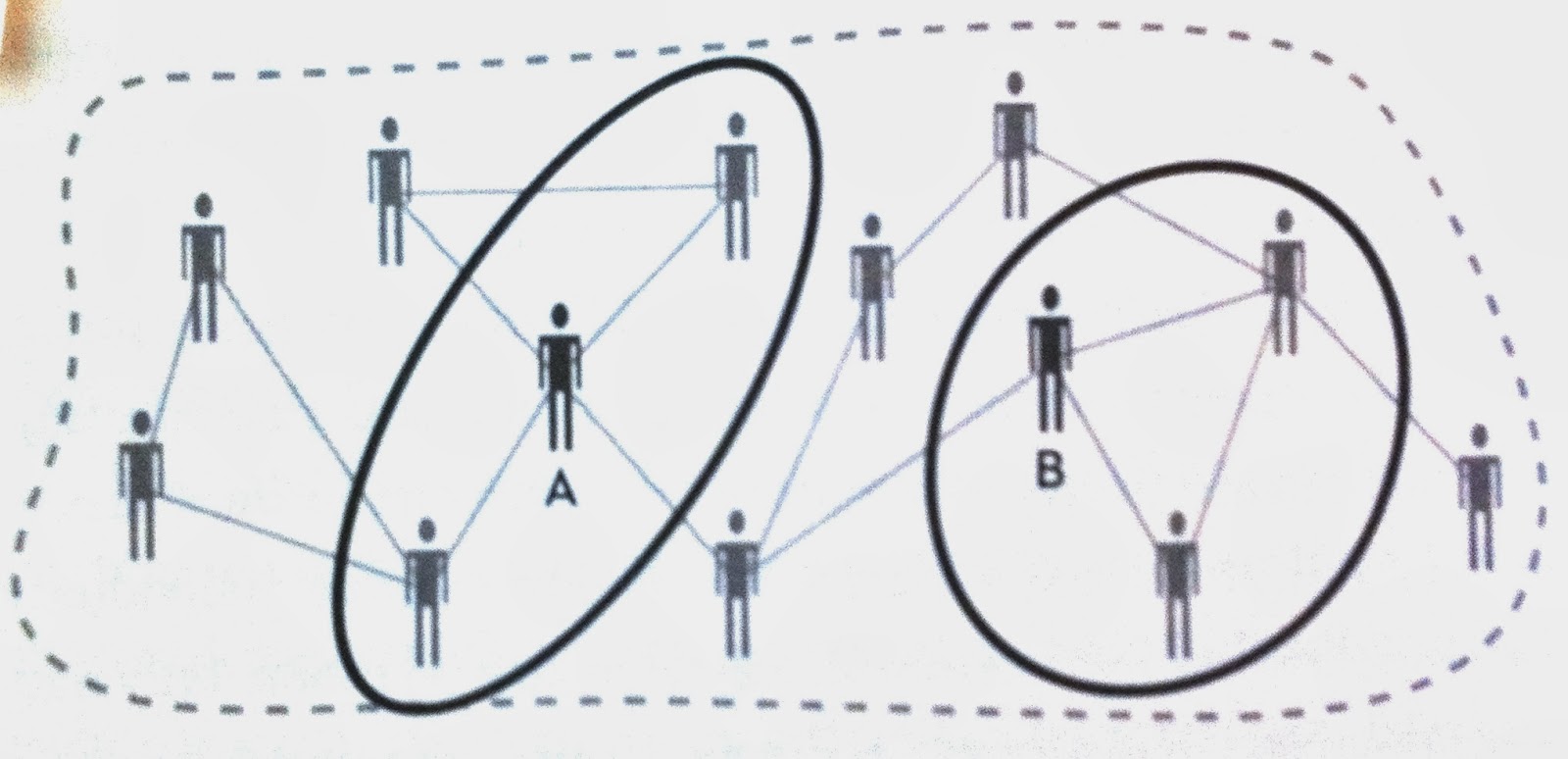
In this article I mentioned Alex Pentland's book Social Physics . One of the points frequently made in the book is that engagement , direct strong, positive interactions between people, within work groups is very important. By repeatedly interacting in cooperative manners, trust grows between team members and common beliefs, habits and norms emerge.

Are progress-focused skills just conversational tricks?

Image
In a recent training group I had been teaching participants about several progress-focused techniques such as the NOAM 7 steps  approach , the progress-focused circle technique , the positive no technique , and progress-focused directing (which is a way of making your expectations clear in a motivated and constructive manner). On the second day of the training, one of the participants made a remark which was something like this: "First of all, I really find all of this interesting and useful but I am wondering about something. If both we employees and managers learn progress-focused skills aren't both parties just becoming better at conversational trickery? First my manager will try to make a clever formulation to try to get me to do something and then I will counter that will some clever formulation of the positive no technique. It feels just like we are just applying tricks? I just don't think we will still be able to be honest and spontaneous!"

It can also be useful to look at what is outside of the outer circle

Image
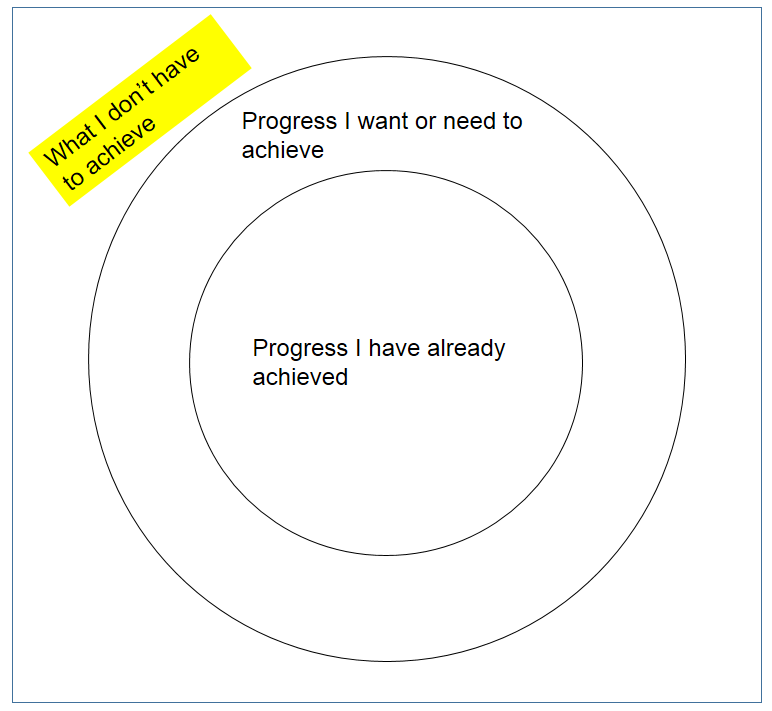
The progress-focused circle technique is getting more well-known and popular. It works like this: the coach draws two circles on a piece of paper or on a flip-over sheet, an inner circle and an outer circle. On small post-it notes clients write down what progress they have already achieved and then they hang them in the inner circle. Next, clients write on post-it notes what progress they further need and/or want to achieve and they hang these in the outer circle. Finally, clients choose which note(s) they first want to be able to move from the outer circle to the inner circle and how they will try to accomplish this. On the first day of a training I gave to a group of teachers I explained the circle technique and invited them to experiment a bit with it. I also gave an example of how I had once used the circle technique with a client of mine. What was interesting in that situation was that my client had not only hanged post-it notes in the inner and outer circle but also outside ...

How intelligent groups discover and learn from new ideas

Image
In his new book Social Physics , MIT data scientist Alex Pentland introduces the discipline of social physics, a big data approach to social science. The discipline focuses mainly on how ideas flow through groups and communities and how social learning takes place to enable productivity and creativity. The book describes much large scale research and many core concepts of social physics and it introduces ideas on how groups, organizations, cities, and societies can be made more effective.

What is meaningful work?

Image
As Teresa Amabile and Steven Kramer have shown, making progress in work that is meaningful is one of the most motivating, if not the most motivating, things in work. Even small progress may have a big positive impact on one's inner work life (this is the authors' term for perception, emotions and motivations in one's work). 'Meaningful progress', of course, consists of two parts: the meaningful part and the progress part. I have focused a lot on the progress element in many previous posts. I'd now like to focus on the meaningful part.

How progress can make itself invisible

Image
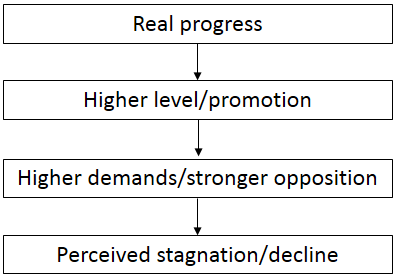
The feeling of making progress in something which is important to you is very motivating. But sometimes you make progress without being aware of it and thus you miss this motivating effect needlessly. In this article I explained some reasons why achieved progress can sometimes be hard to notice. One reason I mentioned is sensory adaptation. This means that we get used to the progress we have made and because of this we stop perceiving it. A second reason I mentioned is that we may interpret progress negatively. An example of this is that we may view the availability of technological resources not as advantages but as perils or problems. A third reason why we may not notice progress is that we may, sometimes unconsciously, concurrently raise the bar for ourselves. When this happens, not only our competence level has increased but also the level we aim for. Because of this, the distance between our current level and our goal remains the same (or even increases).