Posts

Looking wiser at your situation by taking some distance

Image
By looking at your problems from a distance, by taking a third person perspective, you may come to wiser judgments. A powerful tool for making progress in many situations in the perspective-change technique. This tool enables you to look at your situation from a third person perspective. In progress-focused coaching we use this principle by asking perspective-change questions. An example of such a question is: "How would other people notice your situation will have improved?" In this article I describe evidence for the motivating effect of visualizing such a third person perspective. In this article I describe how you can use perspective changes to prepare for difficult conversations. A new publication demonstrates that it is easier to come to wise judgments when taking a third person perspective.

Resetting during the conversation

Image
Have you ever experienced, as a coach or consultant, that you were in a conversation with a client and felt that the conversation wasn't going too well? I guess we all have experienced that. Perhaps the conversation wasn't going too well because your own contribution in the conversation was not the best, for example because your questions were not so relevant or your way of responding to what the other person has said was not adequate. Or maybe you were not satisfied with the conversation because your conversation partner did not seem to find the conversation useful or pleasant. You may get such an impression when they frown or seem to have some resistance. Wouldn't you like to be able to reset the conversation in such situations? Well, you can. Here is a simple way in which you can do that.

How we can age vitally

Image
The knowledge about how we can age vitally grows. Of course, this is not completely under our control but we can increase its chance.  In my book Progressiegericht werken  I conjecture that we can make meaningful progress into old age. I think that we can do a number of things which can increase the chance of ageing vitally. In other words, that we can keep a relatively clear and sharp mind, that we can stay relatively physically fit, and the we can keep enjoying ourselves and stay motivated. If my conjecture turns out to be right that will be very nice. Then, we will not only have been able to add 10 years, on average to our lives, over the last 50 years. We also will be ale to use these years well and live relatively happily.

Attribution and a growth mindset

Image
We can often easily influence how other people interpret their failing. By doing this we may make it easier for them to persist.  In psychology we have discovered that people continuously search for explanations for what happens in their lives. This process, which is called attribution , often happens unconsciously. When people think that causes of what happened and of their own behaviors lie outside of themselves, we speak of external attribution. When they think causes lie within themselves we speak of internal attribution. How people attribute influences both how they view themselves and they choices they make and, because of that, how they will develop.

The plus behind your own minus

Image
Making negative remarks in conversations usually does not work too well.  When, as a manager, you start the conversation by pointing out in detail what the employee has done wrong you risk that the other person will become defensive. And when you have a disagreement with someone and start to criticize this person there is big chance that you will be criticized right back. When people are confronted with negative expressions like criticism they often become tense and reply negatively. In the brain it can be observed that when people are confronted with negative conversational behaviors, cortisol is produced which makes us more defensive and less nuanced. Your negativity provokes negativity in the other person. Put differently, if you give the other person a minus, he is likely to give you a minus in return.

The world keeps making progress

Image
The new radio advertisement of UNICEF in my country says: "The world is on fire. But children did not light it." I believe that UNICEF is a great organization but I dislike that they use the phrase "the world is on fire". There is, of course, much suffering in the world and there are gruesome things going on. It seems like the daily news is filled with stories about war, terrorism, and crime. But if the daily news is the only thing you depend on, the world always looks like a powder keg. And while I think it is useful and necessary for the news to pay attention to the horrors of the world, there is another way of looking at reality which is also important.

8 Principles in progress-focused change

Image
Progress-focused principles and techniques are not only useful in individual conversations and team facilitation processes but also in facilitating organizational change. Here are a few principles I propose for organizational change. Share decision making / work as participatively as possible: change is acceptable when people feel that they can (at least partly) influence or even determine what the change is and how it is shaped. 

The negative effects of needs thwarting

Image
Self-determination theory shows that people have basic psychological needs for autonomy, competence, and relatedness. These basic needs are universal (people of every culture have them) and present throughout life. In this article Maarten Vansteenkiste and Richard Ryan say that the satisfaction of these basic needs is related to well-being and resilience. The frustration of these needs evokes feelings of ill-being and creates behavioral and psychological problems. The figure below (which I have very slightly adapted based on the text) summarizes the negative effects of the basic needs not being satisfied:

Silver lining theories increase performance

Image
A new paper suggests that believing that negative personal characteristic tend to be associated with positive sides benefits one's performance. Here is the abstract of that paper. Holding a silver lining theory: When negative attributes heighten performance  - Alexandra Wesnouskya, Gabriele Oettingen, Peter Gollwitzer (2014)  Abstract : Holding a lay theory that a negative personal attribute is associated with a positive attribute (i.e., a silver lining theory), may increase effortful performance in the domain of the positive attribute.

Usefulness questions in conflict resolution

Image
Usefulness questions belong to the most popular progress-focused techniques. Here are two ways in which you, as a progress-focused mediator, can make them extra helpful in conflict resolution.  Progress-focused principles and techniques are quite useful in conflict resolution. Some previous articles in which I provided some examples are here  and here . A question which is particularly helpful is the usefulness question. It can be asked in roughly two types of ways. The first way of asking focuses on the most useful way the time can be spent during the conversation. For example, it can be asked as follows: "How do you think we can use our time today as useful as possible?" The second way of asking focuses on the desired outcome of the conversation. It can be asked as follows: "After our conversation, how would you notice it had been helpful to you? These two forms of usefulness questions can be asked in combination with each other in a conversation. They complement e...

How to decrease the harmful effects of negative team relationships

Image
What can you do to decrease the harmful effects of a negative team atmosphere?   A negative team atmosphere and negative relationships between team members can harm both employees' job satisfaction and team performance. Researchers De Jong et al. (2014) compared three different ways of dealing with such problems. They called the first approach communication density with which they meant that team members had frequent contact with one another and tried to improve the atmosphere. The second approach which was called member exchange referred to team members assisting one another, and giving help and feedback to one another when needed.

Neuroplasticity in the elderly

Image
Neuroplasticity exist in the older brain, too. But it works differently than in young brains.  It was long thought that brains of young people are very flexible and plastic while those of older people largely lack this plasticity. This thinking has changed a lot over the last thirty years,  Much more is known about the capability of brains to keep changing, even at an advanced age. Some amazing examples of neuroplasticity can be seen here and here . If it is indeed true that brains of older people remain plastic, that would be good news. It would mean that we can keep on making progress throughout our lives. And there are many indications that this is indeed the case.

When does a country make progress?

Image
On this website we usually look at progress at a micro-level. It is also interesting to have a look at the macro-level. For instance, when does a country make progress? The Social Progress Index seems like a useful way to look at that.  About what do we think when we ask ourselves whether or not things are going well in a certain country? Maybe our perception of this is heavily influenced by incidents which may recently have happened in that country. Or perhaps we have contradictory information about things are going right or wrong; some things may seem to be going right while others may seem to be going wrong. Or maybe we are influenced in our perception by little more than the level of economic growth of that country.

When to interrupt?

Image
In progress-focused conversations you will not often interrupt your conversation partner. Sometimes, however, you will deliberately interrupt. Here, I explain when and how you may do that.  As a rule, progress-focused coaches and managers do not interrupt their conversation partners during conversations. They ask questions, listen attentively, encourage, and respond respectfully to what is said. Because of this, their conversation partners will feel that their perspective is taken seriously and that they have time to think calmly about what is important to them.

Are you autonomously motivated?

Image
By providing autonomy-support to others you can help them a lot. But what do you do when your own motivation isn't so autonomous?  Yesterday, we did a workshop progress-focused management with approximately 25 directors and team leaders of a group of schools. One of the topics we talked about was autonomy support. As a reader of this website, you probably know that self-determination theory distinguishes autonomous motivation from controlled motivation. For new readers, here is a brief summary.

Macnamara et al (2014) meta-analysis on deliberate practice not convincing

Image
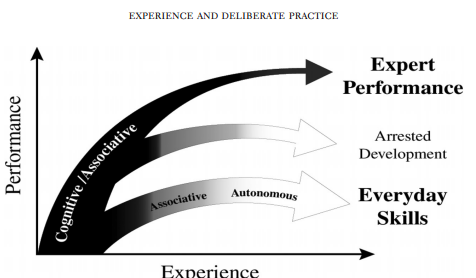
Recently, Macnamara et al. (2014) published a meta-analysis that, they claimed, showed that "deliberate practice is important, but not as important as has been argued" by Ericsson et al. (1993) . Previously, I have written about earlier critical publications about Ericsson's work. Then, I thought these publications, in several ways, did not do justice to his work ( read this ). One of the authors of this new meta-analysis (Hambrick) was one of the authors whose publication I was critical of then. Now, I was curious whether this new publication would do justice to Ericsson and to the deliberate practice concept. Unfortunately, I don't think it does.

Swinging between problematic present and desired future

Image
Swinging back and forth between acknowledgement of current problems and visualizing a better future makes it possible to contain energy for change. Progress usually -perhaps always - begins with a certain dissatisfaction with the current situation. This dissatisfaction with the current situation springs from the realization that things are worse than they could be. In other words, you can imagine a reality which is better than the current reality. Because people are aware of their dissatisfaction with certain aspects of their situation they can start to look for ways of improving those aspects. Their dissatisfaction with their current situation is a tension which can be seen as energy for change . To be able to work effectively on progress, it sounds a bit paradoxical, you need to be able to live with the awareness that you are now living in a reality that needs improvement.

Parenting and autonomy and relatedness

Image
Parenting style affects how autonomous and related children will feel. Self-determination theory has shown that individuals, throughout their lives, have needs for autonomy, competence and relatedness. Simply put, the more their needs are fulfilled, the better individuals feel and function. Past research has shown that the degree to which parent support the fulfillment of these needs the more adapted and well-functioning their children will tend to become ( read more ). When parents use an authoritative and controlling parenting style, their children's development is likely to be hampered to some degree. Examples of such a controlling parenting style are: use of controlling language, emphasis on punishment ànd reward, use of threats, arousing guild and anxietym and using contingent parental regard and affection.

Raising kids to become autonomous individuals

Image
The importance of autonomous functioning As research into self-determination theory has shown there is a strong connection between people’s autonomous functioning and their wellness, their open, engaged and healthy functioning. When people feel autonomous they feel they can make their own choices and follow their own preferences. This does not mean they will be selfish, over individualistic, or self-sufficient. In fact, under good enough conditions, people will actively attempt to internalize and integrate the norms, rules and values of their environment, in other words make them their own. This process of internalizing and integrating external norms, rules and values will happen best 1) when they are transmitted in an autonomy supportive rather than a controlling way, and 2) when these norms, rules and values are congruent with the basic psychological needs for autonomy, competence, and relatedness (Ryan & Deci, 2011).

Rethinking Positive Thinking by Gabriele Oettingen

Image
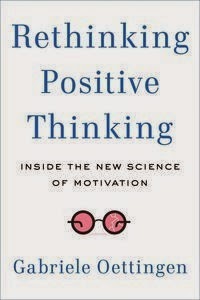
In a new book, Rethinking Positive Thinking: Inside the New Science of Motivation , Gabriele Oettingen of NYU summarizes twenty years of research she has done together with her collaborators. This research has focused on the functions and effects of positive fantasies and of a technique called mental contrasting.

Progress-focused summarizing

Image
Progress-focused professionals often summarize what their conversation partners have said. The summary is spoken in what is sometimes called a tentative tone . This means that the tone is not firm and assertive but it is as if there is a little question mark at the end of each sentence. This makes it easier for the conversation partner to feel free to make any corrections, if needed, to the summary.

Strengthening your prefrontal cortex

Image
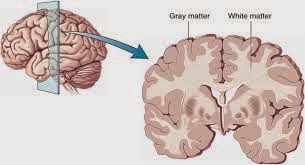
In his book The Marshmallow Test , Walter Mischel describes how the capability of children and adults to exercise self-control has a big impact on their lives. Individuals who are capable of delaying gratification and resist temptations are better capable of focusing on achieving long-term goals. They fare better in many ways than individuals who are less able to exercise self-control. Two brain systems play an important role in succumbing to or retsisting temptations.

The 10-minute rule

Image
Brain scientist John Medina wrote the bestseller Brain Rules: 12 Principles for Surviving and Thriving at Work, Home, and School (2008). The book described 12 rules which we can use to organize our work and life in ways that fit the way our brains work. A rule which interested me and which I remember clearly (I read the book in 2008) is rule 4: " We don't pay attention to boring things " en in particular one aspect of that rule which is the 10-minute rule .

Having to explain helps learning

Image
Have you ever experienced that explaining things to others can be a learning experience for yourself, too? That is a bit paradoxical, isn't it? Our basic idea is that the person to whom the material is explained is the person who is supposed to learn from the process. But if you consider the situation more closely it is not so strange after all that the person who does the explaining also learns.

The Marshmallow Test by Walter Mischel

Image
Walter Mischel is a 84 year old professor at Columbia University. He is the author of a fascinating new book called The Marshmallow test . Mischel became known at the end of the 1960s, mainly through his publications about two topics. The first topic was the degree to which situations influence human behavior. He did research which showed that the idea that people have stable personality traits which cause us to behave consistently over many situations is largely a myth. Instead, he demonstrated, we tend to behave quite differently in different contexts. Thus, characteristics of situations have a significant influence on how we behave. The second topic was self-control. Together with colleagues he did much research into the causes and consequences of self-control, in particular with regard to how children manage to delay gratification. The series of experiments which these researchers did have become know under the popular name of the Marshmallow test , hence the book title.