Posts

Showing posts with the label psychology

Discomfort as a sign of personal growth

Image
The process of personal growth is often accompanied by the experience of discomfort. This is because it usually means stepping outside of our comfort zone. For example, when we learn a new skill, it can feel uncomfortable because it is unfamiliar and we may make mistakes. So discomfort is often a natural part of learning and growing. We can tend to see it as a necessary evil that comes with learning. It can also lead us to learn and grow but prefer to get out of the way.

Interview with Greg Walton

Image
- Coert Visser  Gregory M. Walton , associate professor of psychology at Stanford University, does research and teaching focused on wise interventions which target psychological processes involved in individual and major social problems. These wise interventions may shift how people think about themselves and their situations and may help them flourish, even over long periods of time. Recently he co-edited, with Alia Crum , the Handbook of Wise Interventions. How Social Psychology Can Help People Change . We talk about what these wise interventions are. Why use the word ‘wise’ to describe them? What are some examples of these interventions? How can it be that these brief and simple interventions sometimes have such long term benefits? 

Interview with Igor Grossmann

Image
Igor Grossmann was born in the Soviet Union, grew up in Ukraine and Germany, and studied in Germany and the USA. Currently, he is the director of the Wisdom and Culture Lab at the University of Waterloo, Canada. He is one of the leading researchers in the field of wisdom research (view his Google Scholar profile ). His work focuses on demystifying wisdom and modeling of cultural change. He also co-hosts the On Wisdom Podcas t and initiated worldaftercovid.info . In this interview we will talk about topics like what wisdom is, why there now appears to be an ever-greater call for wisdom, how individuals may reason and act more wisely, and how wisdom may be taught. 

Looking at culture through a psychological lens

Image
Psychology is mostly associated with domains such as child rearing, education and work. But the application of psychological knowledge can go further. We can look at our society and culture through a psychological perspective. 

4 Elements of Wise Leadership

Image
Who still wants to have a leadership role in a large organization in these complex times? The role of leaders seems quite challenging. To begin with, organizations themselves are often extremely complex. As a leader within organizations, you are faced with all kinds of problems, differences of opinion and diverse interests. As a leader, how can you ever have the information, knowledge and skills to bridge these contradictions and to find solutions to these problems? In addition to that, consider the environments in which organizations have to operate. These are also characterized by enormous complexity, change and uncertainty. As a leader in all this turbulence, how can you ever know for sure which way the organization should go? Doesn't being a leader require almost superhuman energy, capabilities, and social skills? 

Which characteristics of situations mainly evoke differences in how we behave?

Image
People don't always behave the same. One situation evokes something different in us than the other. That's why we behave differently in different situations. But which aspects of our personality are relatively stable and which are relatively situation-dependent? And which characteristics of situations mainly evoke differences in how we behave? A new study sheds some light on these questions. 

Self-concordant goals, optimism and well-being

Image
  A new study ( Sheldon et al., 2020 ) combines the self-concordance theory with the attribution theory. 

Making psychological knowledge available to managers

Image
In an email I received the following question: “Do you have any ideas on how to deal with the fact that there is so much psychological knowledge that it is difficult for the typical manager to remember it in the moment, even if they have learned it? I keep leaning towards AI solutions, but that could be technophilia. ” Off the cuff I wrote an answer to his question:

We must give psychology away

Image
George Miller was one of the founders of cognitive psychology and psycho-linguistics. He reached fame with his article The Magical Number Seven, Plus or Minus Two , in which he showed that the capacity of human short-term memory is limited to the capacity to remember roughly 7 elements. When Miller became president of the American Psychological Association (APA) in 1969, he made a statement that appealed to me.

Criticisms of mindset research

Image
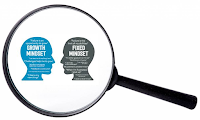
The replication crisis within psychology has been rather big news over the last few years ( read more ). Findings of well-known psychologists about topics like willpower/ego depletion , powerposes , priming , and facial feedback have been scrutinized and to some extent debunked. Recently, criticism has also emerged of the research into mindsets by Carol Dweck and her colleagues. I have written a lot about mindset and I think it is a valuable and useful concept. But, as I write here :

Naive realism: undetected cause of many conflicts

Image
All of us experience reality in a distorted way and we are mostly unaware of that this happens and how this happens. Here is a list of well-known human biases. On this list is a bias called naive realism. This bias plays a special role. It can be seen as the mother of all biases. Naive realism, a term coined by Lee Ross, is the wrong belief that reality is just like we experience it. In other words, it is the cognitive mechanism which blinds us to the many biases we fall prey to.

Review of Against Empathy – Paul Bloom (2016)

Image
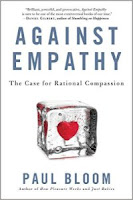
Ideas in psychology can be rather at odds with our intuitions. An example of this can be found in a new book, Against Empathy: The Case for Rational Compassion , written by Paul Bloom, psychologist at Yale University. Many people view empathy as an important source of all that is good in the world and the lack of empathy as an important cause of many bad things in the world.  Leaders like Barack Obama and scientists like George Lakoff and Simon Baron-Cohen view empathy as something of which people can't have too much. Bloom has a different view.

3 Ways in which psychology is trying to make progress

Image
As you may have read, there is much ado in psychology about the correctness of previously found research findings. While some scientists have responded somewhat defensively to this, others are seriously trying to improve the quality of psychological research. Here are three ways in which they try to do that.

What is the relation between mastery goals and intrinsic motivation?

Image
Bieg et al. (2016) did a study to clarify the relation between mastery goals and intrinsic motivation. Let's first look at what these two concepts mean. Meaning and importance of mastery goals and intrinsic motivation Mastery goals are focused on developing competence. This is in contrast with performance goals which are focused on demonstrating one's competence in comparison with others. Why are mastery goals important? Because research has shown that they have many positive effects (in comparison with performance goals), such as choosing challenging goals, persistence, more interest, deeper learning, etc. Intrinsic motivation is the desire to do things which are inherently interesting, fun, exciting or otherwise satisfying. Intrinsic motivation is not only fun. It is also important because it is associated with positive emotions, interest, and deep learning.

Self-directed personality development

Image
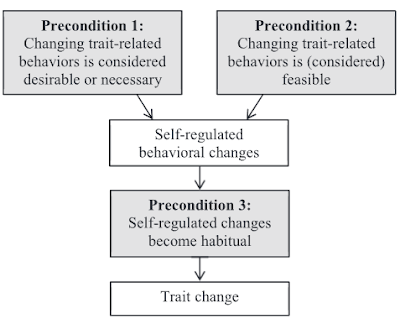
Personality traits are viewed as behavioral tendencies which are relatively stable over time and over a variety of situations. Both among lay people and psychologists there are many who think that changing one's personality substantially is hard or even impossible. This belief is primarily based on the observation that the personality of most people does not appear to change a lot during adult life. But a paper by Hennecke et al. (2014) suggests that self-directed personality change is possible. In the paper they explain why personality usually does not change much, why it actually can be done, and how it can be done.

Solving the replication problem in social science

Image
Today, a team of researchers has made a good contribution to solving the replication problem in social science.  Previously, I wrote about what science is and why it is important (see Improving science ). In that piece I used the picture below to describe some essential parts of the scientific process. Each of these parts are links in the chain of the scientific process and play an essential role in making science function well. In several of these links there are some serious weaknesses which threaten the quality of science.

The real lesson from the Stanford prison experiment?

Which lesson can we draw from the Stanford prison experiment?  The Stanford prison experiment , designed and conducted by Philip Zimbardo in 1971, is one of the most famous experiments in psychology. In the basement of Stanford University an imitation of a prison was built. Students who participated in the study were randomly assigned the role of prisoner or guard. Zimbardo himself also participated in the experiment in the role of superintendent. The standard interpretation of the findings of the study is something like: after a while prisoners started to behave helplessly and submissively while guards started behaving cruel and abusively. The experiment was stopped after a student who conducted interviews in the imitation prison objected to the cruelty of what was happening.

Why psychology is harder than it seems

Image
It is understandable that exact sciences are generally viewed as the most difficult. But psychology may be harder in some ways.  One of my favorite science writers is Sean Carroll. He is a theoretical physicist at Caltech and author of the awarded book T he Particle at the End of the Universe which is about the discovery of the Higgs particle. Recently he surprisingly said: “Physics is by far the easiest science.” False modesty? Or it there some truth in it?

Silver lining theories increase performance

Image
A new paper suggests that believing that negative personal characteristic tend to be associated with positive sides benefits one's performance. Here is the abstract of that paper. Holding a silver lining theory: When negative attributes heighten performance  - Alexandra Wesnouskya, Gabriele Oettingen, Peter Gollwitzer (2014)  Abstract : Holding a lay theory that a negative personal attribute is associated with a positive attribute (i.e., a silver lining theory), may increase effortful performance in the domain of the positive attribute.

Macnamara et al (2014) meta-analysis on deliberate practice not convincing

Image
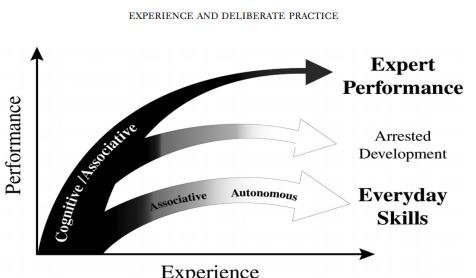
Recently, Macnamara et al. (2014) published a meta-analysis that, they claimed, showed that "deliberate practice is important, but not as important as has been argued" by Ericsson et al. (1993) . Previously, I have written about earlier critical publications about Ericsson's work. Then, I thought these publications, in several ways, did not do justice to his work ( read this ). One of the authors of this new meta-analysis (Hambrick) was one of the authors whose publication I was critical of then. Now, I was curious whether this new publication would do justice to Ericsson and to the deliberate practice concept. Unfortunately, I don't think it does.