Posts

A Plea for Broad Rationality

Image
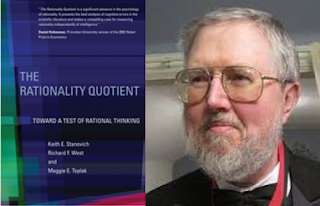
In The Rationality Quotient , which I have interviewed Keith Stanovich about recently, there is an interesting bit in which different conceptualizations of rationality are explained. Roughly there are two conceptualizations of rationality, a thin one and a broad one (a distinction which was first made by political scientist Jon Elster, 1983 ). The thin theory of rationality involves two factors of rationality: instrumental rationality and epistemic rationality.
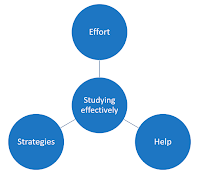

3 Dimensions of studying effectively

Image
How can we study effectively? Below, I describe three dimensions of studying effectively. These are not only meant for young people in schools or universities. Nowadays, lifelong learning has become normal. Keeping on learning and studying is healthy for us. Keeping on challenging ourselves cognitively is one factor contributing to a healthy life. Knowing how to study effectively is beneficial for anyone at any age. The tips below can be used for studying from books but also for other purposes, for example for learning to play a musical instrument.

"This is boring!" - sign of demotivation or of a fixed mindset?

Image
When students say "This is boring", does it indicate a lack of motivation? That is indeed possible but the remark can also be an indication of something else: a fixed mindset. In this video Carol Dweck explains that a fixed mindset makes it harder for people to deal with difficulty. When they find assignments difficult they can be fearful because they wonder whether they have the ability to do them right. This fear can manifest itself in different ways. One way is to directly express it. But often people with a fixed mindset will try to mask their fear. Because when we are in a fixed mindset it can be quite threatening to us to show that we don't believe we are able to do something or to learn something.

Interview with Keith Stanovich (2016)

Image
The Rationality Quotient - Progress toward measuring rationality By Coert Visser I first interviewed Keith Stanovich , Professor Emeritus of Applied Psychology and Human Development at the University of Toronto, in 2009 . In that interview he explained the difference between intelligence and rationality and why rationality is very important. He also pointed out that IQ tests are incomplete measures of cognitive functioning because they do not measure rationality. Now, seven years later, I interview him about his new book, The Rationality Quotient , which he wrote together with his colleagues Richard West and Maggie Toplak , and which presents a prototype of a rational thinking test, the Comprehensive Assessment of Rational Thinking (CART).

Willpower is overrated

Image
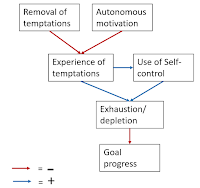
Roy Baumeister's 2012 book Willpower: Rediscovering the Greatest Human Strength argued two things that are intuitively appealing. The first is the primacy of willpower . This idea is that willpower is a very important strength which enables us to exercise self-control which is essential for achieving our goals. The second is about ego-depletion . This idea is that willpower is a limited resource. In other words, when we have used our willpower to concentrate and resist temptations this will leave us with less willpower to take on new challenges and resist new temptations. Both ideas are in trouble.

How willing are we to talk to people with different views?

Image
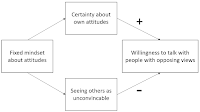
To what extent are you willing to talk to people who think very differently about topics such as politics and religion? Your attitude toward a topic is determined by what you think is true, in other words: by your beliefs. To what extent can people change their attitudes about topics? People with a fixed mindset believe that attitudes generally do not change. People with a growth mindset believe that attitudes can change.

Coaching as the filling of 7 buckets

Image
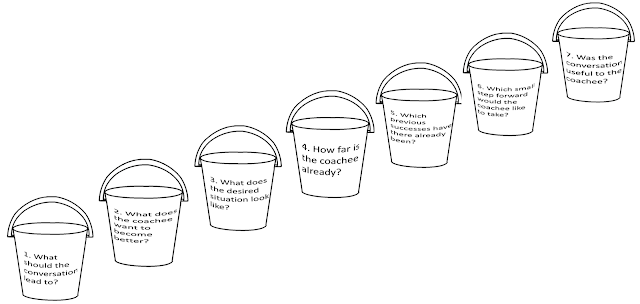
Many progress-focused coaches are enthusiastic about our 7 steps approach . This approach reflects a conversation structure which often works quite well in coaching conversations. Years ago, a student told me she used this approach in her coaching conversations. At the end of the conversation she always would always ask whether coachees had found the conversation useful. Nearly always, theses coaches confirmed that the conversation had been useful, she said. But, she asked, it's very well that they found it useful but I am also engaged in my own learning process. How can I get a sense of whether I have done well in the conversation?

3 Competing diagnostic labels for Donald Trump

Image
I am not big on diagnostic labels so it is with some reluctance that I am writing this. Lately I have been reminded of some of them a lot. Frequently, Donald Trump is referred to as a narcissist and an authoritarian which, I think, is understandable. The narcissist association has to do with how he frequently describes himself in ridiculously positive terms (“I have a great brain”, etc). The authoritarian part has to do with his domineering behavior and ideology. But I am also often reminded of another disorder. For example when I heard him brag about how he sexually assaults women. What is striking is that while he is describing deplorable behavior he is not talking in a contrite way but rather quite proudly. Also, when talking about having paid no taxes, you’d expect an apologetic tone of voice but Trump brags about it and claims it was brilliant of him to use the tax code this way.

The naturalness bias - operating implicitly and across domains and costly

Image
What do we value more in other people's performance: hard work or talent? And what does it matter what the answer is to this question? The naturalness bias in music appreciation Researchers Tsay & Banaji (2011) found evidence for a naturalness bias which is the tendency to prefer supposed 'naturals' over 'strivers'. Even though expert musicians stated that they found hard work more important than talent they implicitly preferred talent over hard work. Tsay and Banaji demonstrated this by presenting more than 100 professionally trained musicians with two profiles of two professional musicians, and a sample musical clip to listen to from each musician.

The Developing Genome – the rise of epigenetics

Image
A new book, The Developing Genome, describes the fascinating developments in the the field of epigenetics. These developments may require us to revise our beliefs about the influence of genes.

Student evaluations are not related to teacher effectiveness

Image
Organizations and schools often try to assess the effectiveness of education or training courses through evaluation forms. Such forms contains several questions which participants have to answer about the teacher/trainer and the course itself. They can express how interesting they found the course and how good they thought the teacher/trainer was. The assumption behind this practice is that these evaluations are good indications of the effectiveness of the teacher/trainer. Some universities publish these evaluation online for everyone to read.

Progress: Ten Reasons to Look Forward to the Future

Image
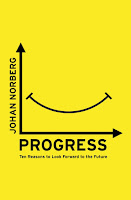
The Swede Johan Norberg has written a book in which he describes how the world has made progress in many areas. The book, titled Progress: Ten Reasons to Look Forward to the Future , has ten chapters in which the following topics are treated: food, sanitation, life expectancy, poverty, violence, the environment, literacy, freedom, equality, and children's rights and perspectives. In his treatment of these topics Norberg uses vivid examples and a lot of objective data. Even if you have read some things about the great progress in the world, you will probably still come across some informative new material in this book. The book is interesting although I have a point of criticism.

Deep work: learning faster and deeper, performing better

Image
Teresa Amabile advocated, based on her research, for, at least on several days of the week, making time to focus and work undisturbed, at least for half an hour to an hour, on work that is most meaningful for you ( see here ). Cal Newport, professor of computer science and author of the book Deep work goes a step further. He argues that in nearly every profession a much better productivity and more satisfaction can be achieved by using an approach he calls deep work.

Making beliefs unfalsifiable

Image
You would think that people only hold beliefs based on their veracity but that is not the case. Of course, people do have beliefs because they think they are true but there are also other reasons for holding beliefs. Those reasons have to do with various psychological and social goals we have. Some examples of this are: wanting to see the world as orderly, meaningful and secure, viewing one's own group as morally good, feeling that you belong to a group, and having influence or power over other people.

Two components of positive communication

Image
Negativity in conversations can put a strain on relationships and can make cooperation harder. Negativity, such as criticism and blame, can make people defensive . While they are in a defensive state of mind, their ability for nuanced and creative thinking is temporarily reduced. Instead, they may try to justify their own behavior or launch a counterattack. Whenever people feel they are approached negatively their reflex is to respond negatively. Both the content of what they say and the way they are saying it is likely to become more negative.

How do we increase our resistance against falsehoods?

Image
Often, it is not so easy to determine whether something is true or false. There are often multiple sides to issues and sometimes a great deal of knowledge is required to be able to come to a good judgment. Even experts can have radically different views on such issues. But it also often happens that the distinction between false and true can be unambiguously made.

The important difference between emotional well-being and satisfaction with life

Image
The happiness which you experience in a situation differs from how positive you think about the situation afterwards. In the same way, there is an important difference between experiencing emotional well-being and life satisfaction. Psychologist Daniel Kahneman and economist Angis Deaton (photo) have formulated important insights about these topics which I will try to summarize below.

Should we make happiness the focus of our lives?

How important should we consider being happy? Should it be a general goal in our life to be happy? Or should it perhaps even be the ultimate goal we should have as a person? Must we see happiness as the main goal in many or all domains of our life, such as work and education? While happiness as a goal sounds quite important, perhaps we should not conclude too quickly that our life resolves or should revolve around happiness only. What happiness precisely is, how we achieve it, and to what extent we should focus on it, may harder to answer that you might think.

3 Ways in which psychology is trying to make progress

Image
As you may have read, there is much ado in psychology about the correctness of previously found research findings. While some scientists have responded somewhat defensively to this, others are seriously trying to improve the quality of psychological research. Here are three ways in which they try to do that.

Which types of goals when?

Image
There are different types of goals. What are the differences and when does which type of goal work best? In a new article, Latham & Seijts (2016) summarize the findings of goals-setting theory (GST; Locke & Latham, 1990 ; 2013 ), a well supported theory about how goals work. GST-research has shown that setting specific, challenging goals lead to higher performance than easy and abstract goals. The general rule is that higher goals lead to higher performance providing four conditions have been met: the individual is competent for the goals, has sufficient situational resources, is committed and receives objective feedback on goal progress.

Carol Dweck's theory tested and largely supported

Image
Carol Dweck's mindset theory has now been fully tested by Smiley et a. (2016) . To understand how they did this, I'll first try to summarize Dweck's theory (see picture below which is mine but was inspired by Smiley et al.'s paper). What Dweck's theory predicts

Good is Stronger than Bad for Older People: The Age-Related Positivity Effect

Image
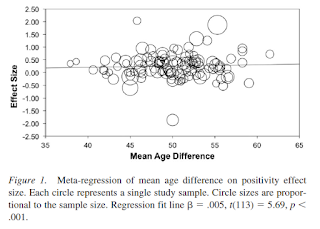
Fifteen years ago, in a review article entitled Bad is stronger than good , Baumeister et al. (2001) documented research into the so-called negativity bias. The article cites research showing that negative events, emotions, and information impact us more strongly than positive ones do. They conclude their article by saying: "In our review, we have found bad to be stronger than good in a disappointingly relentless pattern. We hope that this article may stimulate researchers to search for and identify exceptions; that is, spheres or circumstances in which good events outweigh bad ones. Given the large number of patterns in which bad outweighs good, however, any reversals are likely to remain as mere exceptions."

Positive fantasies may lead to depression

Image
When we feel bad, it makes sense to search for things that may make us feel better, and rather sooner than later. But be careful. Some things which are practically sure to make us feel better in the short term may have detrimental effects in the longer term. One example might be the use of antidepressants. They might work in the short term but might have unpleasant side effects in the longer term. But there is another example which may be a little less obvious: fantasizing about something positive. The thought is logical: "When you feel down, fantasize about how your life might become wonderful. That will make you feel better!"

Even Einstein struggled!

Image
The more high school students think that success in science depends on extraordinary talent the less they will be inclined to choose and persist at science and math courses. Researchers Lin-Siegler et al. (2016) developed a practical intervention to correct such beliefs: stories which make clear that even the most successful scientists had to face struggles and setbacks.

When is positive feedback more motivational and when negative feedback?

Image
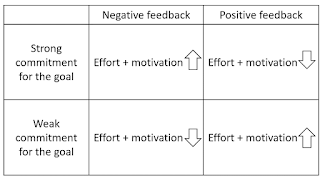
Constructive feedback, both negative and positive, can play an important role in goal achievement. Previous research by Koo and Fishbach (2008) demonstrated that feedback can signal two kinds of messages. The first type of message is about commitment: it can say something about whether your goals are valuable and whether you have a good change of achieving them. Individuals which are not strongly committed to a certain goal can become more motivated after receiving positive feedback (and less after receiving negative feedback). The second message is about progress: feedback can say something about whether you have put in enough effort and whether you have achieved enough progress. Strongly committed individuals tend to get more motivated by negative feedback and less motivated by positive feedback (see the figure on the right). By the way, with negative feedback I do not mean personal criticism or blame but constructive information about what is not going well yet and what could b...