Posts

Using counter-stereotypes to boost flexible thinking

Image
Stereotyping can have all kinds of harmful consequences. This article shows that people who are subject to stereotyping can be hindered in their performance by it. Also, the article shows that stereotyping can stand in the way of an fair and accurate assessment of stereotyped individuals. In this article you can read that stereotypes can affect people at a very young age, often even without them being aware this influence. This article shows evidence that not only negative stereotypes may impede performance but also positive stereotypes.

Robert Biswas Diener's critical reflection on positive psychology

Image
On several occasions I have been critical about positive psychology (for example see here ). To summarize my worries and criticisms briefly, my impression was and is: (1) that positive psychology puts too much emphasis on individual factors as determinants of behaviors and too little on situational factors, (2) that positive psychology emphasizes happiness too much as a criterion, (3) that positive psychology focuses too much on strengths and virtues as causes of human flourishing, and (4) that commerce and science appear to be too much intertwined.

The overrated value of self-reported happiness

Image
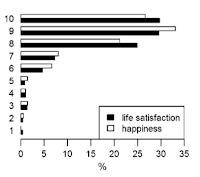
In my earlier article Reasons for skepticism about happiness research I mentioned some skeptical comments to research and publications about happiness (I'll paraphrase what I said there): (1) Happiness is important but the importance of happiness is exaggerated. Happiness should not be the ultimate life goal. It is of relative importance. There are many other things in life which are as important. Trying to maximize happiness is an unwise strategy, (2) Much research into happiness is correlational and does not allow for conclusions about causation of happiness. Still, the suggestion (or at least the interpretation by the public) of publications is often that when a variable correlates with happiness it causes happiness, (3) There are reasons to question the validity of self-reported happiness. Research by Sean Wojcik demonstrated that conservative generally rate themselves as happier than democrats but appear unhappier when assessed through two objective methods (text analysis b...

The importance of talking about problems and the past

Image
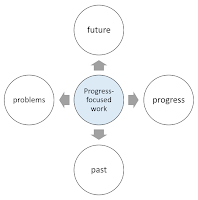
Sometimes people make the following two assertions about progress-focused work: (1) progress-focused work is not focused on problems but on progress, and (2) progress-focused work is not focused on the past but on the future. These assertions sound enthusiastic and I'd rather not be a killjoy but I find it important to contradict them. Neither talking about the past, nor talking about problems is a taboo in progress-focused work. Indeed, both are important elements in virtually every progress-focused conversation. I'll explain below.

Correcting harmful work behavior

Image
There is an interesting new working paper by two Harvard Business School researchers: Toxic workers (Housman & Miner, 2015). They analyzed a large data set containing a range of information about more than 50,000 workers from 11 firms. Their analyses were aimed at gaining insight into which personal and situational circumstances lead to toxic behavior and into which effects toxic behaviors have. In the working paper they present some interesting findings and they make some recommendations for management and HR-policy. Below, I will briefly summarize the findings and add some personal remarks.

3 Ways in which self-assessment may demotivate

Image
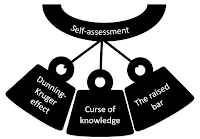
How you look at your own progress determines how competent and motivated you will feel. A way of working which is not well-suited for this, is to grade your own competence level. There are at least three reasons why this type of self-assement is slippery and unreliable: (1) the Dunning-Kruger effect, (2) the curse of knowledge, and (3) the raised bar.

HBR: strengths-focus may backfire

Image
A new article by Tomas Chamorro-Premuzic (photo) in Harvard Business Review says that strengths based coaching may backfire. The article says that the strengths-based approach has become a very popular approach about which many books have been written. An exponent of this popularity is the Gallup questionnaire StrengthsFinder. The article makes the following five claims about the strengths-based approach:

The power of intrinsic rewards is great but soon forgotten

Image
Research into self-determination theory has shown that doing things we find interesting has many positive effects. Doing interesting work in intrinsically rewarding. This means that the doing of the work is so interesting and pleasurable that we need no encouragement to want to do it. When we do such activities we tend to be more engaged, we learn and perform better and we persist longer. By the way, what makes activities interesting is not only determined by the content of the activity bit also by the context in which we are doing it, for example the pleasant social interactions we have when doing the activity.

Overconfidence and the fixed mindset

Image
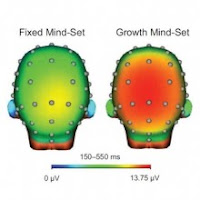
Research has shown that many people tend to overestimate their own capabilities. This overconfidence may undermine performance and relationships with other people. This tendency of people to be overconfident is often thought to be universal. New research, however, shows that this is not the case. It shows that people with a fixed mindset are more vulnerable to overconfidence.

Letting go of irrational beliefs

Image
Being able to change your beliefs is necessary for keeping on playing a positive role in the world. Not being able to think critically about your own beliefs and to change them when they are not true eventually will keep you from playing a constructive role. An ultimate example of the inability to change one's views can be found in religious fanatics who create death and destruction while believing they are doing something good. Letting go of beliefs can be important but also hard.

Believing in progress is not the same as believing in perfection

Image
Recently, a debate took place between Steven Pinker and Matt Ridley on the one site and Malcolm Gladwell and Alain de Botton on the other side. The debate was about the motion 'human kind's best days lie ahead'. Pinker and Ridley defended the motion, Gladwell and de Botton argued against it. You can watch the debate here .

How intelligent people can keep believing in what is not true

Image
How can it be that we sometimes keep holding on to certain beliefs of which we could know, and perhaps deep inside do know, that they are not true? Think about things like magical thinking, superstition and views which logically can't be true and things we have proven to be untrue? In a new article, Believing What We Do Not Believe: Acquiescence to Superstitious Beliefs and Other Powerful Intuitions , Jane Risen looks at this question from the perspective of dual process models such as Kahneman's model distinguishing system 1 and 2 thinking.

What is a growth mindset not?

Image
Perhaps a growth mindset sounds attractive. But perhaps it also sounds to good to be true. Therefore, let's have a look at what a growth mindset is and what it is not. Briefly put, a growth mindset is the belief that you can change your abilities though the investment of effective effort. People do not simply either have a growth mindset or a fixed mindset. Mindset is not like a switch with just two modes: fixed or growth. Instead, there are many degrees possible. It is better to think of mindset as a continuum than as a switch. Furthermore, mindset can be subject to fluctuations. Influences from our environment continuously act on how we think about the malleability of our abilities. In addition to that, it is normal to have different mindsets with respect to different topics. We may believe that we are able to develop certain abilities but may never improve other abilities.

What do you choose: mastery goals or performance goals?

Image
An important distinction in psychology is the distinction between mastery goals and performance goals. Mastery goals are goals which focus on learning new knowledge and skills. Performance goals are about achieving and competing for outcomes. This distinction is important for education. Should you focus on teaching students to set mastery goals or is it wiser to teach them to set performance goals? What works better?

4 Factors which impede change of beliefs

Image
Because beliefs have such great influence in our lives, it is important to be able to evaluate our beliefs properly and to keep developing them. Beliefs are malleable. We can find out that a belief we used to have is untrue and restricts us in our life. But changing our beliefs is not always easy. That is because, as people, we have certain obstacles which may impede changing our beliefs. I want to mention four of those obstacles.

Activity scheduling and depression

Image
There are different types of ways to deal with mental problems such as depression. Three such ways are: (1) taking medication, (2) going into therapy, and (3) helping yourself to solve it. A lot of research has been done into the efficacy of (1) and (2). Less research has been done into (3). There is a non-cynical interpretation of this but also a more cynical interpretation. I don't know which interpretation is more valid. There may be truth in both of them.

Choosing better education and a growth mindset

Image
Recently I criticized an article by Alfie Kohn in which he criticized Carol Dweck. Whether Kohn does not understand the growth mindset well, and is not well informed about mindset research, or deliberately misleads, I don't know. But what he says, isn't true. I want to focus on one of his criticisms because it contains an especially misleading thought. Kohn suggests that promoting a growth mindset implicitly sends the message to just accept and adjust to the conditions we encounter instead of changing them. I'll explain why this is not true.

The limiting effects of implicit self-beliefs

Image
Our beliefs about ourselves can have a strong impact on how we behave and on how we develop and flourish. We are not always aware of our self-beliefs. There are what we call implicit self-beliefs. An example of such an implicit self-belief might be: "I am not a math person." Researchers Cvencek et al. (2015) of the University of Washington found, in a study with 299 Singaporean elementary-school students that children of this age often already have such implicit beliefs about whether they are or aren't 'math people'.

Review of Leadership BS by Jeffrey Pfeffer

Image
I have read many of Jeffrey Pfeffer's books and was looking forward to his new book Leadership BS: fixing workplaces and careers one truth at a time. Unfortunately, I think it is a disappointing book.  Stanford University professor Jeffrey Pfeffer has a provocative new book called Leadership BS: Fixing Workplaces and Careers One Truth at a Time . In the book he criticizes the leadership training industry which, he says, teaches that leaders should be trustworthy, authentic, serving, modest, and empathetic. But according to Pfeffer, there is no evidence that this leadership training does any good. In fact, he says it is harmful because it paints a much too idealistic picture of organizational reality and of the reality of leadership.

Limited-resource view of willpower predicts low goal progress and low well-being

Image
Implicit theories about willpower predict subjective well-being by Katharina Bernecker, Marcel Herrmann, Veronika Brandstätter and Veronika Job (2015) Objective : Lay theories about willpower—the belief that willpower is a limited versus nonlimited resource—affect self-control and goal striving in everyday life ( Job, Dweck, & Walton, 2010 ). Three studies examined whether willpower theories relate to people's subjective well-being by shaping the progress they make towards their personal goals. Method : A cross-sectional (Study 1) and two longitudinal studies (Study 2 & 3) measured individuals' willpower theories and different indicators of subjective well-being. Additionally, Study 3 measured goal striving and personal goal progress.

Mental effort can be contagious

Image
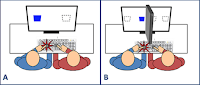
In what they do, people are sensitive to the presence of others. But what is exactly known about the influence of other people's presence? The social facilitation effect has been known since 1965 and means that people perform behaviors which are largely automated more easily in the presence of others. But the presence of others can be distracting when executing tasks which require much concentration ( Horwitz & McCaffrey, 2008 ). In a new study Desender, Beurms, & Van den Bussche (2015) demonstrate that mental effort can be contagious.

The leftward drift

Image
I came across an intriguing bit in Richard Nisbett's book Mindware which was about what he called the leftward drift. This leftward drift refers to the fact that the number of college and university students who self-identify as liberal or far left in their political orientation increase as they move through college. At the same time, the number of students who call themselves conservative or far left decreases. In other words, college makes many students drift to the left in their political views.

5 Dimensions of belief systems

Image
Gerard Saucier of the university of Oregon has done research into belief systems of people. Belief systems are important because they guide people's behaviors and thereby influence their development and the circumstances in which they will find themselves. Saucier has created insight into what kind of belief systems there are. He did this using factor analysis. Through factor analysis it is possible to reduce a large number of variables to a more limited number of variables (factors; read more ). Saucier found out that the degree to which people vary in their beliefs can be describes using the following 5 dimensions ( Saucier, 2013 ).

How to deal with the arrogant-yet-ignorant state of mind

Image
We do not fully perceive and understand reality as it is. First, our senses do not permit us to perceive large parts of reality accurately or at all. Second, evolution has equipped us with cognitive rules of thumb (heuristics) which are fast and helpful to survive in most situations but which are also crude and inaccurate in many ways ( read more ). To add to this, we are to some (perhaps large) extent unaware of these handicaps. In other words, we may be ignorant without realizing it. The 2x2 model below describes four states of mind regarding our own ignorance.

Solving the replication problem in social science

Image
Today, a team of researchers has made a good contribution to solving the replication problem in social science.  Previously, I wrote about what science is and why it is important (see Improving science ). In that piece I used the picture below to describe some essential parts of the scientific process. Each of these parts are links in the chain of the scientific process and play an essential role in making science function well. In several of these links there are some serious weaknesses which threaten the quality of science.