Posts

The benefits of social cognition vs the benefits of task-focused processing
Image
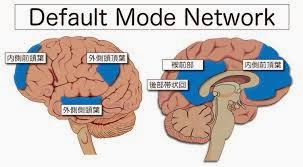
In Social: why our brains are wired to connect  (also read this post ), Matt Lieberman explains that, within our brains there are two quite distinct neural systems for respectively social and non-social thinking. These two systems appear to be antagonistic in the sense that when one of the two is very active, the other is largely inactive. In addition to this he explains that whenever a person is focused on a specific task the non-social system is turned on and as soon as the person stops focusing on the task, his or her social system will turn on. Because this neural system becomes active as soon as one finishes a specific task, it is called the default nework. It seems that when we are not focusing on a specific task we are not doing nothing. We are engaged in social cognition, in other words, thinking about other people and our relationships with them. Lieberman writes:

The key to creating new jobs: empowering innovations

Image
My view is that prolonged growth of inequality in developed economies is likely to be detrimental for human well-being (here are some references: 1 , 2 , 3 , 4 ). People on the political right often defend this inequality by claiming that the super rich must be allowed to stay super rich because they are the motors behind job growth. In this video , Clayton Christensen explains that how investments are made determines how economies develop. Essentially, investments can be targeted at three types of innovations: 1) empowering innovations which transform products from complex and unaffordable for the mass to simple and affordable, thereby expanding markets and creating jobs, 2) sustaining innovations , which make good products better, and which do not create many new products because they do not make markets larger, 3) efficiency innovations , which is making the same products at lower prices and which destroy jobs and free capital.

Dealing with the paradox of confident ignorance

Image
Charles Darwin once said: "Ignorance more frequently begets confidence than does knowledge." This sounds like a strange idea. Is it true that confidence sometimes signals ignorance? Is it true that people who are very confident about their opinions may actually be more ignorant than people who are less confident? If it is true, it might lead to a paradoxical prescription: if you feel very confident you are right about a topic you may not know enough about it. Is there evidence that confidence and ignorance may go hand in hand? Yes, a new study by Philip Fernbach et al. does provide some evidence: Political Extremism Is Supported by an Illusion of Understanding Philip M. Fernbach, Todd Rogers, Craig R. Fox, & Steven A. Sloman  Abstract : People often hold extreme political attitudes about complex policies. We hypothesized that people typically know less about such policies than they think they do (the illusion of explanatory depth) and that polarized attitudes are en...

Self-handicapping

Image
Readers of this blog will probably know that believing that human abilities and traits cannot be developed (this type of belief is called a fixed mindset ) has several disadvantages. One of those disadvantages is a fear of challenges and doing things that are hard. When you do something which is challenging you may make mistakes and fail and this could be interpreted as a lack of natural ability.

What work engagement is

Image
In this post I mentioned some questions about work engagement. Now, here are some answers about what work engagement is, what causes it, and what benefits is has. 1. What is work engagement? Work engagement is a fulfilling state of mind of people at work which is characterized by vigor, dedication, and absorption ( ref ). Vigor refers to the energy, effort, persistence, and resilience; dedication refers to involvement, sense of significance ,  enthusiasm, inspiration, pride, and challenge; absorption refers to concentration, happy engrossment in one's work, feeling that time passes quickly and finding it hard to detach oneself from work. 2. What are work engagement's benefits? Work engagement is associated with workers’ creativity, their inclination to help colleagues, their organizational citizenship behaviors ( ref ; ref ) and their mental health ( ref ). Also, clients of engaged workers tend to be more satisfied ( ref ). 3. How stable is work engagemen...

20 Inspiring quotes from True Professionalism

Image
One book which has had an important influence on me, through the years, is David Maister's True professionalism . In the book David argues - apparently completely unafraid to be seen as naive or idealistic - for an ethical, ambitious, and principles-based approach to doing one's work. I have known this book ever since was published in 1997 and I still agree with the large majority of things in it and I'm still inspired by them. And perhaps more importantly, I think they work. Here are 20 quotes from the book.

Top 10 Greatest Classical Composers Ever

Image
Just for fun, my son Brent and I made a brief poll: Who is the Greatest Classical Composer ever?  115 people filled in the survey. Here are the results (by the way, the difference between no. 1 and 2 was only 1 vote): Top 10 Greatest Classical Composers Ever

Conditions for perpetual peace

Image
In a review of Steven Pinker’s The Better Angels of Our Nature , Bill Gates said that the book "stands out as one of the most important books I’ve read – not just this year, but ever". Who am I to disagree? The book is an unbelievably rich resource documenting the steady decline of violence throughout history. To get an impression of how strong this decline has been, take a look at this graph.

15 Inspiring quotes from 'How life imitates chess' by Garry Kasparov

Image
In 2007, Garry Kasparov, one of the greatest chess players ever, wrote the book How life imitates chess . In that book he looked back on his great career and he made comparisons between life and chess. The book contains some inspiring thoughts. Here are some quotes: You must know what questions to ask and ask them frequently Personal style is not generic software that you can download. You must instead recognize what works best for you and then, through trial and error, develop your own method- your own map.

Two lesser known disadvantages of fixed mindsets

Image
As you may know , how we think about our own qualities has a big impact on how we feel, how we behave, how we learn and how we perform. Thinking our abilities (such as our intelligence) are fixed (this is called a fixed mindset) makes us less challenge seeking and less persistent and also more defensive. Also our performance is lower over time. A growth mindset, thinking that our qualities can be developed through effort, leads to more challenge seeking, persistence, openness, learning and performance over time. Thinking about others' qualities as fixed also has consequences such as being quicker to stereotype and label people, to be less open to new information about people, and to punish them quicker when they have done something wrong. In a chapter in a new book , Carol Dweck mentions two lesser known finding with respect to mindsets.

The scaling question: flexible and versatile technology for progress-focused professionals

Image
In 1965, psychologist Hadley Cantril wrote an article describing an intervention he called The Cantril Self-Anchoring Striving Scale . This intervention can be considered a precursor to what has now become one of the most popular techniques used by coaches: the scaling question. The scaling question came to fruition by the developers of the solution-focused approach, Insoo Kim Berg, Steve de Shazer, and their colleagues at the Brief Family Therapy Center in the United States. They added important new elements to the question of scale. Over the years, its application in coaching practice has been further refined and its applications have become broader. Scaling questions are among the most flexible and versatile techniques coaches use today.

The circle technique

Image
The circle technique is an easy and flexible technique for making progress more visible and for helping people make further progress. It can be used individually but also in coachings and in team facilitation. It works like this. First you draw to two circles on a big piece of paper, an inner circle and an outer circle. The inner circle represents progress which has already been made; the outer circle stands for progress which has yet to be made. You can use these circles by going through the following 4 steps: What is the topic you want to use the circles for? Write down what that topic is and why it is desirable and/or important for you to make progress with respect to that topic. What progress have you already made since you started working on that topic? Write everything you have already accomplished on small post-it notes down and put them in the inner-circle. Take your time to think of every little step forward you have taken; nothing is too small. What further progre...

Combining practice based learning and theory based learning

Image
As mentioned before on this site, I am rather reluctant about the usefulness of a giving advice - especially unasked-for advice. In general my assumption is that self-found internal solutions , solutions which are based on people's own experience and which they can apply themselves without help or training by others, are the most motivating way forward in many situations. By the way, from this, it does not follow that we can't help other people. We can actually help people identify their own internal solutions. But the way to do this is not to offer them judgments and advices. Instead, through a process of asking carefully chosen questions and interventions people can, in many cases be helped to find their own solutions to problems ( here is an example of how such a helping strategy may be designed).

Did you know these things about heritability?

I came across a Huffington post article from some time ago written by Scott Barry Kaufman in which he teamed up with David S. Moore to list  8 Surprising Facts About Parenting, Genes and What Really Makes Us Who We Are . Do the statements below indeed surprise you? Which surprised you most? How convincing do you find Kaufman's explanations?

On diagnostics in personnel selection

Image
David Creelman will soon publish an article on the use of diagnostics in personnel decisions. In it, he points at some problems with formal diagnostic tools. He argues that organizations should always use formal tools in combination with informal tools. I'll link to the article when it's online. Meanwhile, David asked me for my views on the use of diagnostics in personnel management and here is what I said:

Do recent publications prove Anders Ericsson and colleagues wrong about the importance of deliberate practice? No.

Image
About deliberate practice I have written much about deliberate practice . Researchers have demonstrated there is a lack of evidence for the claim that natural ability is the main factor behind top performance. They have found out that what is crucial instead is the amount of time the individual has practiced and the specific way in which he or she has practiced (read more about deliberate practice here and here ). Recently, two articles were published on the relative importance of deliberate practice and 'talent' for achieving high levels of performance. First, there was Deliberate Practice Is Necessary but Not Sufficient to Explain Individual Differences in Piano Sight-Reading Skill by E. Meinz and D. Hambrick. Second, there was  Deliberate Practice: Necessary But Not Sufficient   by G. Campitelli and F. Gobet. Do these articles shed a new light on how important deliberate practice is? Do they call for a return to the idea that innate abilities are, in the e...

Contaminated mindware- how can we protect ourselves against it

Image

Promoting freedom and influence around the world

Image
Abolishing dictatorships That several peoples in several North African and Middle Eastern countries are revolting against their dictators seems a good thing to me. I think all people desire for freedom and influence and all countries deserve and are potentially capable of democratic self-rule. I am convinced that the liberation of these countries will not only free the peoples of those countries but also make peace in the region and in the world at large more likely. Why? Because I think that the tendency towards war usually (perhaps always) begins with tyranny; the threat of war seems like the fuel on which tyranny runs. Whenever non-democratic leaders face opposition from the people they attempt to neutralize this by creating fear and control. The reliable way to do this is to create the threat of war with self-created external enemies. This way they legitimatize the enforcement of loyalty. This may explain why dictators often routinely use a language of hate and violence up to ...

Structure and autonomy

Image

Fundamental human needs and forces

Image
Three basic needs (SDT) As I've written about quite a few   times , self determination theory (SDT) has demonstrated three basic human needs which motivate people to initiate behavior: Need for autonomy, which is the perception of experiencing a sense of choice and psychological freedom in the initiation and continued engagement in one’s actions,  Need for competence, which is the perception of being effective in dealing with the environment, and  Need for relatedness, which is the sense of being cared for and connected to other people.  Four human forces (behavioral economics)

Contaminated mindware: how can we protect ourselves against it?

Image
There is a set of beliefs, rules, strategies, convictions, etcetera that is called ' contaminated mindware '. Definition of contaminated mindware : not true: it is not grounded in evidence  potentially harmful: it is on the whole not beneficial for the one who holds it it can be very sticky and it can spread easily throughout a population. 

Interview with Claude Steele

Image
By Coert Visser (2010) Professor Claude Steele is a social psychologist and the Provost of Columbia University. He has written the book Whistling Vivaldi: And Other Clues to How Stereotypes Affect Us about the work he and his colleagues have done on a phenomenon called 'stereotype threat'. Stereotype threat is the tendency to expect, perceive, and be influenced by negative stereotypes about one’s social category, such as one’s age, sex, sexual orientation, ethnicity, profession, nationality, political affiliation, mental health status, and so on. Stereotype threat can be harmful by creating racial, gender, and social class achievements gaps in schools and in the workplace and tensions across group lines. In this interview Claude Steele explains, among other things, what stereotype threat is and what can be done about it. How would you explain in simple terms to people like teachers, managers, and policymakers what stereotype threat is and why it is important for them to ...

The Optimal Zone Scale

Image
The scaling question is the most popular question which emerged out of the solution-focused approach. This article describes step by step how you can use the scalling question. Here is a video example . Some time ago, when I was talking with a client an interesting varation of the scaling question emerged between the two of us, which I call the Optimal Zone Scale. The woman I was coaching wanted to learn to be more assertive so that she could defend her personal boundaries and speak her mind on issues that mattered to her. This would help her to feel better at work and to keep her work load within acceptable limits. It would also help her colleagues. By being more assertive she would be clearer to her colleagues who would know then exactly what they could and could not expect from her. Also, she had noticed that colleagues tended to respect and value her more when she acted more assertively. However, my client was also aware that she shouldn't go too far in speaking her mind. Sh...

The Optimal Zone Scale

Interview with Wally Gingerich

Image
By Coert Visser (2010) Wallace Gingerich is Professor Emeritus of Social Work at the Mandel School of Applied Social Sciences, Case Western Reserve University, Cleveland, Ohio. As a core member of the Brief Family Therapy Center in Milwaukee (BFTC), Wisconsin, in the 1980s, he has been an important contributor to the development of the solution-focused approach. In this interview, he looks back on how and why he joined BFCT and on how the solution-focused approach emerged in the next few years after he joined. Also, he talks about the BRIEFER project and about a soon to be published review of the research on the effectiveness of the solution-focused approach. Finally, he reflects on the ways the solution-focused approach may further develop. Could you tell a bit about when and how you got involved with the Brief Family Therapy Center?