Posts

Showing posts with the label book

Meaning in life

Image
Frank Martela , a Finnish philosopher and psychologist, has written a book entitled A wonderful life. Insights on Finding a Meaningful Existence . In the book he addresses questions such as: "Is life about finding happiness?" and "What can the basis for meaning still be in a time when religion is less and less the self-evident framework?" He invites the reader to think differently about meaning and comes up with some simple ideas for experiencing meaning.
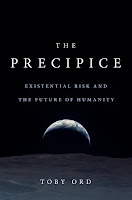

The Precipice: Existential Risk and the Future of Humanity

Image
A new book has come out progress on the largest imaginable time scale. It's called The Precipice and it was written by Oxford-based Australian moral philosopher Toby Ord . The book states that we, as humanity, may only be at the beginning of our development. Humanity has existed for 200,000 years and there could be millions of future human generations. In the time we have had as humanity so far, we have made significant progress in improving the human condition, particularly in the last few hundred years. As humanity, we have collaborated with each other over time and distance.

12 quotes from Michael Cohen's book Disloyal

Image
I read Michael Cohen's book Disloyal . Here are some quotes from the book and some thoughts about the book and Trump. 

Overconfidence: how do you protect yourself against it? (book)

Image
Don A. Moore , a professor of psychology at the University of California, has written a book called Perfectly Confident, How to calibrate your decisions wisely . The book is about the question to what extent it is good to have a lot of confidence in your own abilities and performance. Many think that a high level of self-confidence can help to perform well and may be a prerequisite for good performance. But Moore shows that great self-confidence that is not rooted in reality actually does more harm than good. Overestimation seems to do more harm than good, especially in activities that require effort and competence. But overestimation is also common. How can we protect ourselves from it?

Calling bullshit: The Art of Skepticism in a Data-Driven World (book)

Image
In his 1996 book The Demon Haunted World , Carl Sagan wrote the chapter The Fine Art of Baloney Detection . A recently published book by Carl Bergstrom and Jevin West, Calling Bullshit. The Art of Skepticism in a Data-Driven World , can be seen as an extension and update of that chapter. The book is about bullshit, or nonsense claims. Bullshit is as old as humanity and even older. Many other animal species also employ all kinds of deception. Some animals sound the alarm to suggest that a predator is coming to lure other animals away from food in order to get to it themselves. But besides humans, there are only a few animal species that deliberately mislead. This is because deliberately misleading others requires a fairly complex brain.

The Psychology of Praise (book)

Image
A new book has been published on the psychology of complimenting: Psychological perspectives on praise (Brummelman (Ed.), 2020). Complimenting is a technique we use often and often with the best of intentions. But the psychology of praise is quite complex.  The effects of compliments are not always what we expect from them. In this book, 36 researchers in 16 chapters analyze praise from different theoretical perspectives such as the self-enhancement theory, the self-verification theory, the attribution theory, and the self-determination theory. Below I briefly discuss two interesting chapters from the book.

Resistance to Belief Change (book)

Image
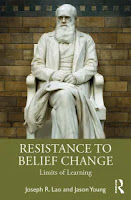
You have probably experienced this. You are talking to someone who stubbornly refuses to admit that he is wrong. You give good arguments for your point of view and explain why the other person's point of view is not correct, but the other person stubbornly sticks to how he sees it. How is this possible? Why don't people just admit they're wrong? The book Resistance to Belief Change by Joseph Lao and Jason Young (2019) answers this question.

A Brief Introduction to the Progress-Focused Approach

Image
A Brief Introduction to the Progress-Focused Approach – A Guide for Managers, Coaches, Teachers, and Students  Coert Visser (2020)  This book introduces the progress-focused approach. This approach is a set of principles and techniques which help individuals and teams make achieved and desired meaningful progress visible and to get ideas about next steps forward. The progress-focused approach, originally inspired by some practical techniques from solution-focused brief therapy, now heavily relies on findings from scientific psychology. It is used by many coaches, trainers, managers, teachers and employees. 

Review of Against Empathy – Paul Bloom (2016)

Image
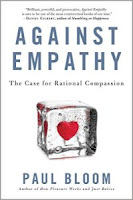
Ideas in psychology can be rather at odds with our intuitions. An example of this can be found in a new book, Against Empathy: The Case for Rational Compassion , written by Paul Bloom, psychologist at Yale University. Many people view empathy as an important source of all that is good in the world and the lack of empathy as an important cause of many bad things in the world.  Leaders like Barack Obama and scientists like George Lakoff and Simon Baron-Cohen view empathy as something of which people can't have too much. Bloom has a different view.

Interview with Keith Stanovich (2016)

Image
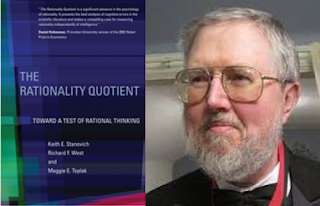
The Rationality Quotient - Progress toward measuring rationality By Coert Visser I first interviewed Keith Stanovich , Professor Emeritus of Applied Psychology and Human Development at the University of Toronto, in 2009 . In that interview he explained the difference between intelligence and rationality and why rationality is very important. He also pointed out that IQ tests are incomplete measures of cognitive functioning because they do not measure rationality. Now, seven years later, I interview him about his new book, The Rationality Quotient , which he wrote together with his colleagues Richard West and Maggie Toplak , and which presents a prototype of a rational thinking test, the Comprehensive Assessment of Rational Thinking (CART).

Progress: Ten Reasons to Look Forward to the Future

Image
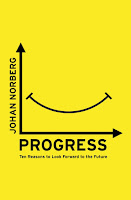
The Swede Johan Norberg has written a book in which he describes how the world has made progress in many areas. The book, titled Progress: Ten Reasons to Look Forward to the Future , has ten chapters in which the following topics are treated: food, sanitation, life expectancy, poverty, violence, the environment, literacy, freedom, equality, and children's rights and perspectives. In his treatment of these topics Norberg uses vivid examples and a lot of objective data. Even if you have read some things about the great progress in the world, you will probably still come across some informative new material in this book. The book is interesting although I have a point of criticism.

Deep work: learning faster and deeper, performing better

Image
Teresa Amabile advocated, based on her research, for, at least on several days of the week, making time to focus and work undisturbed, at least for half an hour to an hour, on work that is most meaningful for you ( see here ). Cal Newport, professor of computer science and author of the book Deep work goes a step further. He argues that in nearly every profession a much better productivity and more satisfaction can be achieved by using an approach he calls deep work.

Interview with Anders Ericsson

Image
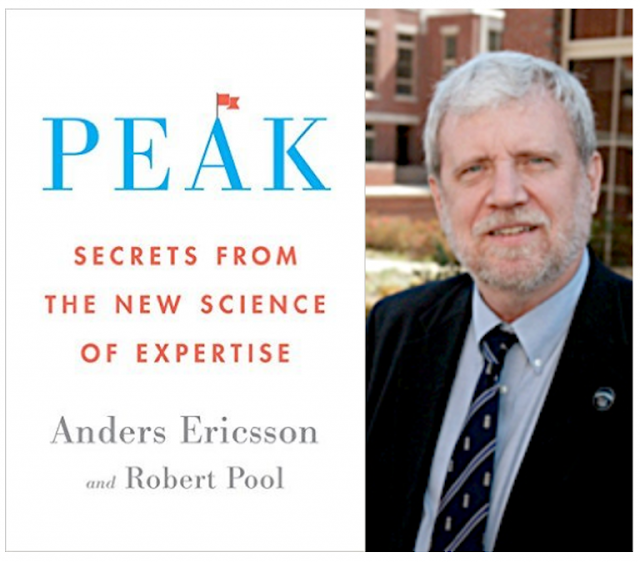
K. Anders Ericsson is a Swedish psychologist who is a professor at Florida State University. In the beginning of his career he worked with among other Nobel laureate Herbert Simon. He is recognized as the most prominent researcher in the area of expertise development. Together with his colleagues, he has done research into how experts in different areas have managed to reach the top of their fields. Uptil now he has mostly scientific publications. But now he and Robert Pool have published a popular book about expertise development: Secrets from the New Science of Expertise . Here is an interview with Ericsson about this new book. 

The Progress Principle

Image
Coert Visser, Juli 1, 2012 In 2011, Teresa Amabile, a professor of Business Administration at Harvard Business School and Steven Kramer, a developmental psychologist published the book The Progress Principle: Using Small Wins to Ignite Joy, Engagement, and Creativity at Work which is one of the most compelling cases yet for focusing on progress in work. In the book they report on a large scale study into worker performance and motivation. One thing Amabile and Kramer did was to survey more than 600 managers from dozens of companies, asking them to rank the impact on employee motivation and emotions of five workplace factors: recognition for good work, incentives, interpersonal support, making progress and clear goals. The majority of these managers, chose “recognition for good work”. But a multiyear study which tracked day-to-day activities of 238 people in 26 project teams in 7 companies in 3 industries showed that these managers were not right about this. The study exami...

The steady rise of Radical Enlightenment ideals

Image
Recently I have referred to the influence on modern societies of ideas and values from the Enlightenment. Here I call Enlightenment values an important basis for the progress which has happened in the Western world over the last two centuries and suggest that the rest of the world can benefit from them as much (which is actually happening more and more).

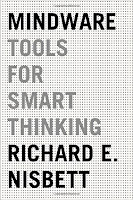
Review of Mindware: tools for smart thinking by Richard Nisbett

Image
Psychologist Richard Nisbett has written a new book called Mindware: tools for smart thinking. I think it is essential reading for students of psychology. Here is my review. As a psychology student in the 1980s I first learned about the work of the Richard Nisbett. Together with Lee Ross (who coined the term fundamental attribution error; which I will come back to later) he wrote the classic book Human Inference (1980) about how people use rules of thumb in social judgment and decision making and about how we often systematic mistakes in the way we judge events and people. Nisbett & Ross' work build on and was closely related to the work done by Amos Tversky and Daniel Kahneman.

The upward spiral: getting rid of your depression step by step

Image
Neuroscientist Alex Korb has written an interesting book about depression called The upward spiral . A core idea in his book is that depression is not simply a state in which you feel badly but rather a downward spiral. What he means by this is that while you feel depressed you are inclined to do things which do not relieve your depression but maintain or aggravate it. Things such as physical activity, social contact, and thinking about happy memories, among other things, might help but are precisely the type of things which you are not inclined to do when you feel depressed. Because of this, it is easy to get stuck in a depressed mood.

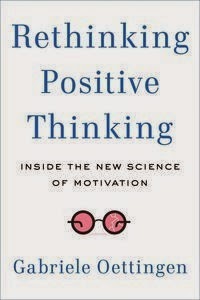
Rethinking Positive Thinking by Gabriele Oettingen

Image
In a new book, Rethinking Positive Thinking: Inside the New Science of Motivation , Gabriele Oettingen of NYU summarizes twenty years of research she has done together with her collaborators. This research has focused on the functions and effects of positive fantasies and of a technique called mental contrasting.

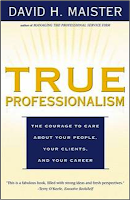
20 Inspiring quotes from True Professionalism

Image
One book which has had an important influence on me, through the years, is David Maister's True professionalism . In the book David argues - apparently completely unafraid to be seen as naive or idealistic - for an ethical, ambitious, and principles-based approach to doing one's work. I have known this book ever since was published in 1997 and I still agree with the large majority of things in it and I'm still inspired by them. And perhaps more importantly, I think they work. Here are 20 quotes from the book.

Interview with Keith Stanovich

Image
By Coert Visser Dr. Keith Stanovich, Professor of Human Development and Applied Psychology of the University of Toronto, is a leading expert on the psychology of reading and on rationality. His latest book, What Intelligence Tests Miss: The Psychology of Rational Thought , shows that IQ tests are very incomplete measures of cognitive functioning. These tests fail to assess rational thinking styles and skills which are nevertheless crucial to real-world behavior. In this interview with Keith Stanovich he explains the difference between IQ and rationality and why rationality is so important. Also he shares his views on how rationality can be enhanced.