Posts

Is there a good case for 'positive education'?

Image
In this post I expressed my skepticism about something which is called Positive education , an approach advocated by Martin Seligman (photo). What that is, is explained in this video which I also mentioned. My two reasons for being skeptical were 1) that I found the definitions of positive education as mentioned in the video confusing rather than clarifying, and 2) that it is not clear to me to what extent well-being should be an outcome measure in education ( read the post for more details on that point).

Are positive stereotypes taken as compliments?

We generally think of stereotypes as generalizing negative judgments about a category of people. In a stereotype the behavior of individuals is attributed to the group to which they (appear to) belong. Also, supposed negative characteristics of groups may be projected on individuals which belong to the group. It is not surprising that many people view stereotypes as undesirable. There are some quite dangerous sides to it. They can create tensions between groups and even undermine the integrity of society. Moreover they deny the unique character of individuals. But what about positive stereotypes, in other words, positive generalizations about social groups? Will these be viewed positively because they are really just complimentary?

The punitive versus the empathetic mindset

Image
Some time ago, I heard about a situation in which a student behaved disruptively in class. I will repeat here, from memory, what happened. The teacher asked the student if he would calmly join the lesson and pay attention. The student did not directly reply and went on with his disruptive behavior. Then some other students started making comments like: "Just send him to the hall, miss." The teacher replied: "No, I will not send him to the hall", to which the students said: "Why not? He is behaving very badly." The teacher replied: "If I send students to the hall, they will not learn how to behave appropriately in the classroom. That is why I won't do that." Then she repeated here question to the student to calmly pay attention to the lesson which he then started to do without complaining. This approach seems counter-intuitive. Shouldn't you just be tough to students behaving badly? Maybe not. A new paper provides some insight into what ...

The spillover effect and the crucial role of basic needs

Image
Research has shown a correlation exists between how satisfied people are with their job and how satisfied they are with their life. But there are two uncertainties about the relationship between job satisfaction and life satisfaction. First, it is unknown whether this effect primarily happens in the Western world; this is where most of this research has taken place. Second, it is unknown whether there is a causal relationship between job satisfaction and life satisfaction because most research is correlational. Third, there is no clear explanation for the relationship between job satisfaction and life satisfaction. A new paper provides more clarity in all these questions.

Where does meaning in life come from?

Image
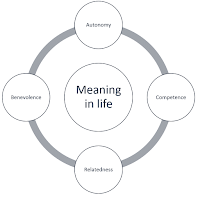
In earlier times the question of how to lead meaningful life was simply answered by referring to the bible (or another religious text, depending on when and where you were born). But for an increasing number of people religious dogma is no longer a satisfying answer to the question what a meaningful life means. Nowadays it has become a common wisdom that we should discover or create meaning in life ourselves. This raises two questions: how important is a sense of having meaning in life anyway, and -if it is important - how can we find or create it?

The learning and performing model

Image
After I wrote this post I talked to several people about the importance of making the distinction between learning and performing. Most people I talked to found this distinction interesting and valuable and were interested in the three phases I mention: the preparation phase, the execution phase, and the reflection phase. Generally, people found these stages useful and they said they would like to pay more attention to preparation and reflection.

Why do we bounce back from failure better when we have a growth mindset?

Image
We know that we generally bounce back from failure better when we have a growth mindset than when we have a fixed mindset (Dweck, 1999). This has to do with the fact that we interpret failing differently in different mindsets and because of that we also feel and behave differently. In a growth mindset we view failure as a consequence of not having put in enough effort or not having used an effective strategy ( read more ).

The effects of envy and admiration

Image
You meet someone who is obviously better at something than you are. What do you feel? Do you admire the person? Do you feel envy? What are the effects of these different emotions? Below you can first read about social comparison theory, which has something useful to say about these phenomena. Then, I mention new research by Niels van de Ven about the effects of these different emotions.

The growth mindset and intrinsic motivation contribute independently to persistence

Image
One way to describe what the progress-focused approach means is captured in a model which I introduced in my book Kiezen voor progressie . The model (see figure right) describes how both a growth mindset and autonomous motivation contribute to effective effort and how effort in turn creates progress. In this post you read more about this model and it may be used. Looking at this model you might wonder if there should also be an arrow between the growth mindset and autonomous motivation. Do these two influence each other, too? I have thought this before and several people have asked me about it. As far as I know it has been studied only once.

How does grading affect motivation?

Image
Research guided by self-determination theory has shown that factors like punishment, rewards, threats, coercion, and competition can undermine the quality of motivation of individuals. When those factors are applied the autonomous motivation of individuals, which consists of intrinsic motivation and internalized motivation, can be diminished ( read more about autonomous motivation). In such circumstances a more controlled motivation can emerge which generally comes with anxiety, tension, and worse performance. One factor which also can harm autonomous motivation is grading performance in schools. A new study by Krijgsman et al. (2017) explores the relationship between performance grading and students motivation in physical education (N=409).

The Emerging Neuroscience of Intrinsic Motivation

Image
A new paper by Di Domenico & Ryan (2017) describes how a neuroscience of intrinsic motivation is emerging. Intrinsic motivation is the total of our spontaneous tendencies to be curious and interested, to seek challenges, and practice to develop our skills and knowledge even in the absence of separate rewards. Research within the framework of self-determination theory has shown that intrinsic motivation is a motivation which is present throughout the life span and which is associated with various positive effects such as learning, performing, creativity, and well-being. But intrinsic motivation is dependent on the perception of one's own competence and autonomy. If these two basic needs are thwarted, we tend to be less intrinsically motivated.

The problem with twin studies

Image
Over roughly the last 100 years there has been a debate within the social sciences about the question how large the influence of genes and environments are on human abilities, traits, behaviors, and psychiatric and medical problems. This debate is often referred to as the nature versus nurture debate. It is not only held within the scientific community but also in popular media and by lay people. A central role in these debates is played by the so-called twin studies. Often these studies are viewed as compelling natural experiments which demonstrate the separate influence of genes and environmental factors. And they are often cited as evidence of the large influence of genes on personal characteristics such as intelligence and personality traits. But there is a growing criticism of the validity of these conclusions because there are many problems in those twin studies. A recent book by Joseph (2015) explains in detail what the many problems in twin studies are.

Checklist: 7 questions to support your professional development

Image
What role does experience play in our professional development? We often think that how long people have been doing something determines how good they are at it. Of course, that thought can't be completely wrong. We can't say that there is no relationship at all between how long you have been doing something and how good you are at it. Someone who has been playing the piano for just a few weeks can't be very good at it yet. Learning the basic skills requires a certain time. But the relation between how long we have been doing something and how good we are at it is different than we often assume. Take as an example driving a car. When both my sons were doing their driving lessons, these last few years, they could precisely point out to me the many little mistakes I made while driving. I have been doing it for 35 years and thought I was reasonably good at it. But because of the many small reprimands by my sons, I have come to realize that many little mistakes have crept int...

How teachers can combine autonomy-support with structure

Image
Autonomy support is effective in parenting, in teaching, and in leadership at work. Some incorrectly think that a remark like this should be read as a plea for 'anything goes'. Autonomy support does not mean that no structure is offered. Autonomy support and structure go hand in hand. Offering structure strengthens the perception of autonomy and is even often a prerequisite for it. I elaborate this thought using the context of education as an example.

4 Surprising facts about epigenetics

Image
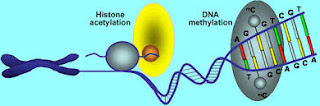
Some time ago, I wrote about a book by David Moore on epigenetics , a field in biology which now changes our understanding of the influence of genes. Epigenetics, briefly, means that, under the influence of the environment, certain molecules attach themselves to our chromosomes thereby affecting how our DNA functions and how we develop. While there are important developments in epigenetics, both laypeople and biologists remain skeptical about its significance. Based on the book by Moore, I explain below why I think that is wrong.

How autonomy-support predicts the development of performance

Image
Previous research points at positive effects of autonomy support in different contexts such as parenting, education, and work. Usually, in studies into its effects in the workplace, static measures of performance are used. (for example Gagne & Deci, 2005). This means that a measurement of performance is done at one point in time which is used as a criterion measure. Researchers Kanat-Maymon & Reizer (2017) followed a different approach. They tracked performance of newly employed soccer analysts (N=68) over a period of 5 months.

Do you see both achieved progress and further needed progress?

Image
To which degree and how we focus our attention on progress has important consequences for how feel and behave. There are several types of mistakes we can make in how pay attention to progress. Below I describe three mostly ineffective ways of looking at progress and one effective way. For this purpose I use a 2x2 model which is structured around two questions. The first question is: do you have a clear view on achieved progress? The second question is: do you have a view on what further progress needs to be made? These two questions are equally important. Perceiving achieved progress makes us more optimistic and helps us understand what has worked so far. Perceiving which further progress needs to be made gives us a perspective and something which we can usefully focus our energy on. The 2x2 model shows four quadrants each of which represents a way of focusing on progress.

Democratic rights are like muscles: use them or lose them

Image
Today the general elections are being held in the Netherlands. Here is why I will vote. What is democracy? What are the essential features of a democracy and why are they important? What are the essential differences between democracies and non-democracies and why do these differences matter? How important are democratic rights and how important is it to use them? I answer these questions below.

Is the feeling that you are competent always an indication of incompetence?

Image
In this article I mentioned the following quote by Charles Darwin: "Ignorance more frequently begets confidence than does knowledge." I agreed with this and offered the Dunning-Kruger effect as an explanation of the phenomenon. This explanation, briefly, is that it takes competence to more or less reliably assess one's own competence. People with low competence in a certain area do not realize how low their competence is. In another article I mentioned that incompetence can even go hand in hand with arrogance while competence can go hand in hand with modesty. Of course, the Dunning-Kruger effect is not only applicable to other people but also to ourselves. David Dunning (photo), one of the pioneering researcher into the effect, said the following:

Intrinsic and extrinsic motivation and goals

Image
The terms intrinsic and extrinsic motivation are frequently used and are sometimes a source of confusion. Below, I try to share my understanding of these term as they are used in self-determination theory (SDT). First, I'll explain what the difference between intrinsic and extrinsic motivation is and  then what the terms intrinsic and extrinsic goals mean.

Mindset also affects social development

Image
In a new paper David Yeager (2017) explores the possible relation between mindset and problem behavior of adolescents. He describes how, in reaction to social problems such as being bullied or excluded, a fixed mindset (the belief that people cannot change) may lead to self-blame and other-blame and also may predict more extreme affective, physiological, and behavioral responses such as depression and aggression.

How the Dunning-Kruger effect can block progress

Image
A brief way of explaining the Dunning-Kruger effect is that it takes competence to recognize incompetence. A consequence of this is that people who are relatively incompetent are less able to recognize their own incompetence. Kruger & Dunning (1999) and Dunning et al. (2003) showed that in incompetent people there is often a self-overestimation effect: people with low performance tend to overestimate their own performance. The lower the performance, the higher the self-overestimation tends to be. The higher the performance the less people tend to overestimate themselves. The very highest performing people even tend to underestimate themselves. This phenomenon creates the painful situation that those who perform the lowest tend to underestimate their need for development the most. A new study by Pennycook et al. (2017) adds new depth to these previous findings.

Three basic needs: always operative even when we don't realize it

Image
We use the word 'need' broadly in daily life. It can refer to anything we desire for or think we need or prefer, at any time. In psychology, in particular within self-determination theory (SDT), it has a much more specific meaning. SDT speaks of universal basic needs for autonomy, competence, and relatedness ( read more ). The word 'need' in SDT refers to something that is a requirement for good and healthy functioning.

6 Evidence based learning strategies

Image
In a previous post I mentioned 3 Dimensions of studying effectively . One of those three dimensions is using effective learning strategies. All over the internet lists of effective studying can be found and I, too, have written several times about this topic (for example, see the above-mentioned post). Now, I have come across an interesting post by Megan Smith en Yana Weinstein in which they describe 6 evidence based strategies for learning some of which are relatively unknown both among teachers and students. Here are those 6 learning strategies:

Study: the effects of autonomy support by managers

Image
In two Chinese government schools some central ideas from self-determination theory were tested ( Nie et al., 2017 ). What was specifically tested were the effects of perceived autonomy support by managers on the motivation of employees (266 teachers) and on several output criteria (job satisfaction, work stress, and illness symptoms). The expectation based on previous research were that perceived autonomy support (1) would predict more autonomous motivation (versus controlled motivation, and (2) more job satisfaction, with less work stress, and less illness symptoms. The figure below summarizes the findings of the study.