Posts

Showing posts with the label inequality

Growth mindset promotion through value alignment: better performance, less inequality

Image
Growth mindset promotion through value alignment can lead to better school performance and less inequality. Education is constantly looking for ways to improve the school performance of students. Another important goal is to reduce inequality in education. The challenge is to discover how we can achieve this in the most effective way. Recent research by three American researchers offers a possible solution. They developed an intervention aimed at promoting a growth mindset in students.

Can most people be trusted?

Image
Trust in other people is important in any society. The degree to which people trust each other contributes to their well-being and to the economy of a country. In a new publication , Esteban Ortiz-Ospina and Max Roser show that the degree to which people trust others differs strongly in different countries. In countries like Norway, The Netherlands, Sweden, and China there is much trust; in countries like The Philippines, Brazil, Colombia, Ghana and Romania there is little.

Saving capitalism (Robert Reich)

Image
Some time ago I wrote about economist Richard Wolff's book Democracy at work. A cure for capitalism in which he argued that capitalism is inherently threatening to democracy and that a fundamental change is needed in the direction of Worker Self-Directed Enterprises (WSDEs) which would be an alternative to capitalism ( read my explanation of this argument here ). While I found the book interesting, I wasn't convinced that capitalism should be replaced. Now, there is a book by another economist, also one who is very critical about current day capitalism and concerned for the protection of the democracy, Robert Reich . The book is called Saving Capitalism: For the Many, Not the Few and it argues not for the replacement of capitalism but for its rescue.

5 Dimensions of belief systems

Image
Gerard Saucier of the university of Oregon has done research into belief systems of people. Belief systems are important because they guide people's behaviors and thereby influence their development and the circumstances in which they will find themselves. Saucier has created insight into what kind of belief systems there are. He did this using factor analysis. Through factor analysis it is possible to reduce a large number of variables to a more limited number of variables (factors; read more ). Saucier found out that the degree to which people vary in their beliefs can be describes using the following 5 dimensions ( Saucier, 2013 ).

Let's change our mindset about the world

Image
Hans and Ola Rosling show that we know too little about the progress in the world and they explain how we can change that.  Hans Rosling, founder of the Gapminder foundation, became famous for his TED presentations about the development of the world in areas such as health, wealth and environment. In those presentations he use Tendalyzer software which made them spectacular and dynamic (see here ). They were also surprising in their content. They showed that the world has improved, and is still improving, in many ways. Examples of such improvements are decreasing child mortality, decreasing extreme poverty, better and longer education, especially for women, increase life expectancy, etc.

r>g

Image
Thomas Piketty, author of Capital in the Twenty-First Century Until 2010, I did not know much about the consequences of economic inequality. Then I came across the book The Spirit Level in which the authors Richard Wilkinson and Kate Pickett presented their research results which showed that high levels of inequality in societies is harmful for everyone within them. Their research showed that (1) the more developed a country is, the less important further economic growth is for certain objectively measurable outcomes, like life expectancy ( see graph ), (2) in a study of 23 of the richest countries there was a strong relationship between health and social problems and the level of income inequality ( see graph ), (3) in a study of the 50 American States this same relationship was found ( see graph ).

The key to creating new jobs: empowering innovations

Image
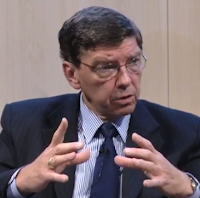
My view is that prolonged growth of inequality in developed economies is likely to be detrimental for human well-being (here are some references: 1 , 2 , 3 , 4 ). People on the political right often defend this inequality by claiming that the super rich must be allowed to stay super rich because they are the motors behind job growth. In this video , Clayton Christensen explains that how investments are made determines how economies develop. Essentially, investments can be targeted at three types of innovations: 1) empowering innovations which transform products from complex and unaffordable for the mass to simple and affordable, thereby expanding markets and creating jobs, 2) sustaining innovations , which make good products better, and which do not create many new products because they do not make markets larger, 3) efficiency innovations , which is making the same products at lower prices and which destroy jobs and free capital.

Income inequality is strongly related to health and social problems

Image
Coert Visser, 2010 The Relationship between Equality and Thriving Richard Wilkinson and Kate Pickett, two English epidemiologists, have written  The Spirit Level: Why Greater Equality Makes Societies Stronger , a provocative book on how high levels of inequality in societies is harmful for everyone within them. Their research shows that while economic policies in developed countries stress the importance of economic growth, economic growth is only an important determinant of the degree to which societies thrive up to a certain point. After a certain point the contribution of further economic growth begins to create only diminishing marginal returns: the relationship between economic growth and certain objectively measurable outcomes, like life expectancy, level off (see figure 1).