Posts

Showing posts with the label social

The benefits of social cognition vs the benefits of task-focused processing
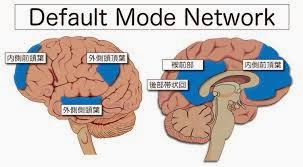
Image
In Social: why our brains are wired to connect  (also read this post ), Matt Lieberman explains that, within our brains there are two quite distinct neural systems for respectively social and non-social thinking. These two systems appear to be antagonistic in the sense that when one of the two is very active, the other is largely inactive. In addition to this he explains that whenever a person is focused on a specific task the non-social system is turned on and as soon as the person stops focusing on the task, his or her social system will turn on. Because this neural system becomes active as soon as one finishes a specific task, it is called the default nework. It seems that when we are not focusing on a specific task we are not doing nothing. We are engaged in social cognition, in other words, thinking about other people and our relationships with them. Lieberman writes:

Interview with Claude Steele

Image
By Coert Visser (2010) Professor Claude Steele is a social psychologist and the Provost of Columbia University. He has written the book Whistling Vivaldi: And Other Clues to How Stereotypes Affect Us about the work he and his colleagues have done on a phenomenon called 'stereotype threat'. Stereotype threat is the tendency to expect, perceive, and be influenced by negative stereotypes about one’s social category, such as one’s age, sex, sexual orientation, ethnicity, profession, nationality, political affiliation, mental health status, and so on. Stereotype threat can be harmful by creating racial, gender, and social class achievements gaps in schools and in the workplace and tensions across group lines. In this interview Claude Steele explains, among other things, what stereotype threat is and what can be done about it. How would you explain in simple terms to people like teachers, managers, and policymakers what stereotype threat is and why it is important for them to ...