Posts

Showing posts with the label performance

Progress contexts as a basis for performance, well-being and growth

Image
When I was trained as a psychologist in the 1980s, the dominant way of thinking about intelligence and personality tended towards what we now call a fixed mindset . Broadly speaking, we were taught that both intelligence and personality can hardly be developed after a certain age (say, 18). Personality was broadly defined as the set of stable behavioral tendencies of individuals. Individual differences in personality were thought to be relatively unchangeable and also meaningful for how we should organize our lives (think of career choices, for example). The word 'stable' meant two things. First, personality traits were thought to be stable across situations. In other words, we behave in approximately the same way in different types of situations because of our personality traits. Second, personality traits were thought to be stable over time. This meant that personality traits do not (or cannot) change much over the course of a person's life.

Microclimates in the classroom: Goal structures and teacher mindsets

Image
Recent research ( Woznicki et al., 2023 ) examines the formation of classroom microclimates within STEM courses. This study looked at how course goal structures and instructor mindsets contribute to these microclimates and their impact on student perceptions and experiences.

The strategic mindset improves strategies and performance

Image
  Patricia Chen and colleagues introduce a new concept: the strategic mindset. This mindset appears to be useful when we are dealing with new tasks or setbacks.

Overconfidence: how do you protect yourself against it? (book)

Image
Don A. Moore , a professor of psychology at the University of California, has written a book called Perfectly Confident, How to calibrate your decisions wisely . The book is about the question to what extent it is good to have a lot of confidence in your own abilities and performance. Many think that a high level of self-confidence can help to perform well and may be a prerequisite for good performance. But Moore shows that great self-confidence that is not rooted in reality actually does more harm than good. Overestimation seems to do more harm than good, especially in activities that require effort and competence. But overestimation is also common. How can we protect ourselves from it?

The learning and performing model

Image
After I wrote this post I talked to several people about the importance of making the distinction between learning and performing. Most people I talked to found this distinction interesting and valuable and were interested in the three phases I mention: the preparation phase, the execution phase, and the reflection phase. Generally, people found these stages useful and they said they would like to pay more attention to preparation and reflection.

How does grading affect motivation?

Image
Research guided by self-determination theory has shown that factors like punishment, rewards, threats, coercion, and competition can undermine the quality of motivation of individuals. When those factors are applied the autonomous motivation of individuals, which consists of intrinsic motivation and internalized motivation, can be diminished ( read more about autonomous motivation). In such circumstances a more controlled motivation can emerge which generally comes with anxiety, tension, and worse performance. One factor which also can harm autonomous motivation is grading performance in schools. A new study by Krijgsman et al. (2017) explores the relationship between performance grading and students motivation in physical education (N=409).

How autonomy-support predicts the development of performance

Image
Previous research points at positive effects of autonomy support in different contexts such as parenting, education, and work. Usually, in studies into its effects in the workplace, static measures of performance are used. (for example Gagne & Deci, 2005). This means that a measurement of performance is done at one point in time which is used as a criterion measure. Researchers Kanat-Maymon & Reizer (2017) followed a different approach. They tracked performance of newly employed soccer analysts (N=68) over a period of 5 months.

How the Dunning-Kruger effect can block progress

Image
A brief way of explaining the Dunning-Kruger effect is that it takes competence to recognize incompetence. A consequence of this is that people who are relatively incompetent are less able to recognize their own incompetence. Kruger & Dunning (1999) and Dunning et al. (2003) showed that in incompetent people there is often a self-overestimation effect: people with low performance tend to overestimate their own performance. The lower the performance, the higher the self-overestimation tends to be. The higher the performance the less people tend to overestimate themselves. The very highest performing people even tend to underestimate themselves. This phenomenon creates the painful situation that those who perform the lowest tend to underestimate their need for development the most. A new study by Pennycook et al. (2017) adds new depth to these previous findings.

Self-determination theory in organizations

Image
In a new article Deci et al. (2017) give an overview of research within self-determination theory which is relevant for work and organizations. Among other things, they describe the important distinction between autonomous and controlled motivation (see more about this distinction) and the three basic psychological need (for competence, autonomy, and relatedness). The article reviews much research with as central theme that autonomous motivation (vs controlled motivation) is associated with both performance and wellness. Also, the show that the key to fostering autonomous motivation is to create workplaces which contribute to the satisfaction of the above mentioned basic needs. The picture below summarizes these points:

Which types of goals when?

Image
There are different types of goals. What are the differences and when does which type of goal work best? In a new article, Latham & Seijts (2016) summarize the findings of goals-setting theory (GST; Locke & Latham, 1990 ; 2013 ), a well supported theory about how goals work. GST-research has shown that setting specific, challenging goals lead to higher performance than easy and abstract goals. The general rule is that higher goals lead to higher performance providing four conditions have been met: the individual is competent for the goals, has sufficient situational resources, is committed and receives objective feedback on goal progress.

Should teachers focus on performance differences between students or within students?

Image
Teachers’ perceptions and actions can have a great impact on students’ beliefs, motivation, effort and performance. One way in which teachers affect their students is in the way they evaluate students’ performance. Falko Rheinberg (1980) showed that some teachers tend to compare students with each other – this is called a social reference norm orientation (social RNO) – while other teachers tend to compare a student’s current learning outcomes with his or her previous performance – this is called an individual reference norm orientation (individual RNO).

The harder we push, the worse it gets

Image
Parents, teachers, and managers play an important role for respectively children, students, and employees. They not only have a facilitating, helping role but also a directing role. They pay attention, show understanding, they help and facilitate, they give a good example and they clarify expectations and set limits. When they fulfill their role effectively, the individuals they work with will be likely to function and develop well en feel good. These individuals are likely to engage in what they find interesting and important and to behave in well-adjusted ways and offer useful contributions.

Silver lining theories increase performance

Image
A new paper suggests that believing that negative personal characteristic tend to be associated with positive sides benefits one's performance. Here is the abstract of that paper. Holding a silver lining theory: When negative attributes heighten performance  - Alexandra Wesnouskya, Gabriele Oettingen, Peter Gollwitzer (2014)  Abstract : Holding a lay theory that a negative personal attribute is associated with a positive attribute (i.e., a silver lining theory), may increase effortful performance in the domain of the positive attribute.

How to decrease the harmful effects of negative team relationships

Image
What can you do to decrease the harmful effects of a negative team atmosphere?   A negative team atmosphere and negative relationships between team members can harm both employees' job satisfaction and team performance. Researchers De Jong et al. (2014) compared three different ways of dealing with such problems. They called the first approach communication density with which they meant that team members had frequent contact with one another and tried to improve the atmosphere. The second approach which was called member exchange referred to team members assisting one another, and giving help and feedback to one another when needed.

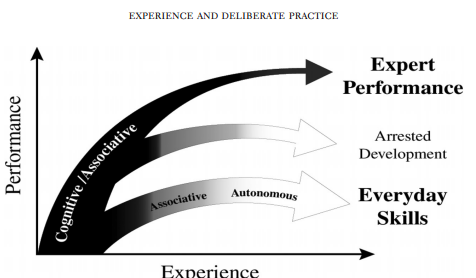
Macnamara et al (2014) meta-analysis on deliberate practice not convincing

Image
Recently, Macnamara et al. (2014) published a meta-analysis that, they claimed, showed that "deliberate practice is important, but not as important as has been argued" by Ericsson et al. (1993) . Previously, I have written about earlier critical publications about Ericsson's work. Then, I thought these publications, in several ways, did not do justice to his work ( read this ). One of the authors of this new meta-analysis (Hambrick) was one of the authors whose publication I was critical of then. Now, I was curious whether this new publication would do justice to Ericsson and to the deliberate practice concept. Unfortunately, I don't think it does.

Mentioning ethnicity in performance situations: two downsides

Image
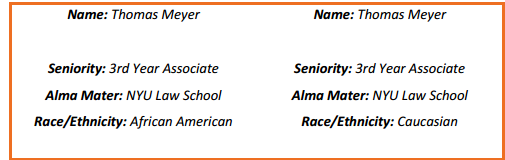
When people have to take a test for an application they are often asked to mention their race or ethnicity by ticking a box. Personally, I am skeptical about both the meaningfulness and the usefulness of  categorizing people in such a way and I think it is likely to do more harm than good. In my view it not only is likely to harm the performance but also is likely to distort the process of assessing the performance. I'll explain.

Adding constraints in order to improve performance

I am often intrigued by the complexity and paradoxes in optimal human functioning. One thing which interests me in particular is that our performance may sometimes be improved by deliberately adding constraints to the circumstances in which we have to perform. I came across nice example when I was watching Back and Forth about the rockband Foo Fighters. Just before starting to record the 2011 album Wasting Light , Foo Fighters front man Dave Grohl decided that instead recording the album digitally they would record it on tape. This implied that the recording process would be harder and less flexible. While digitally recorded music can be easily manipulated and corrected, analogously recorded music can't be. Grohl realized that the easiness of digital recording might make musicians a bit lazy and easy. After all, any mistake could be relatively easily corrected. But analogous recording would require the band members to be really sharp and play really well. While we can't know ...

In praise of high-level cognitive control when performing complex tasks

Image
In Going from Good to Great with Complex Tasks , Ozgun Atasoy explains that the belief that consciously thinking about what we are doing, when performing complex tasks, by definition harms our performance, is wrong. It is true that some type of conscious thinking can harm our functioning. For example, when we are typing on a keyboard, we run largely on auto-pilot. If we would try to consciously control the typing of each separate letter, this would slow us down a great deal and probably cause us to make many mistakes.