Posts

Showing posts with the label history

The Emerging Neuroscience of Intrinsic Motivation

Image
A new paper by Di Domenico & Ryan (2017) describes how a neuroscience of intrinsic motivation is emerging. Intrinsic motivation is the total of our spontaneous tendencies to be curious and interested, to seek challenges, and practice to develop our skills and knowledge even in the absence of separate rewards. Research within the framework of self-determination theory has shown that intrinsic motivation is a motivation which is present throughout the life span and which is associated with various positive effects such as learning, performing, creativity, and well-being. But intrinsic motivation is dependent on the perception of one's own competence and autonomy. If these two basic needs are thwarted, we tend to be less intrinsically motivated.
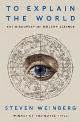
The discovery of science

Image
In 1979, Steven Weinberg (81) won the Nobel Prize in physics for his contribution to the unification of the weak nuclear force an electromagnetic interaction between elementary particles. Recently, he published an interesting book, To Explain the World , about a subject that has fascinated him for a long time: the discovery of science. First, the book takes us to the old Greeks. The civilization in Ancient Greece is generally divided into three era's: the Archaic era (roughly from 800 to 480 BC) with Athene as its center and great thinkers like Thales , Heraclitus , and Democritus , The Classical era (roughly from 500 to 323 BC) with Athens as its center and Socrates , Plato , and Artistotle as its main philosophers, and the Hellenistic era (from 334 tot 30 BC) with Alexandria as its center and Euclid , Ptolemy , and Archimedes as its greatest thinkers.