Posts

Showing posts with the label engagement

The Role of Mindset and Motivation in the Academic Performance of First-Year Secondary School Students

Image
A recent study ( Boncquet et al., 2023 ) investigated the influence of mindset and motivation on the academic performance of first-year secondary school students (N=3415). This study focused on the quality of motivation according to self-determination theory and the mindset about intelligence following Carol Dweck's framework. The goal was to reveal the impact on learning outcomes such as engagement, learning strategies, and performance.

Towards a better definition of student engagement

Image
  Student engagement plays an important role in achieving good school performance. Traditionally, researchers have assumed that there are three ways in which students can be engaged (behavioral, emotional and cognitive). In two longitudinal studies, Reeve et al. (2020 ) show that student engagement needs to be redefined in two ways.

How to motivate students? Use a dual process!

Image
The dual process model provides insight into how teachers can support student motivation. Self-determination theory offers important clues for how teachers can improve student motivation. This article provides a summary of these types of interventions. When teachers apply these interventions, students are likely to feel better, become more engaged in lessons and learn and perform better. Jang, Kim & Reeve (2016) show that a two-track approach, or, as they call it, a "dual process model", is needed to achieve this.

Using social network incentives to stimulate engagement, trust and results

Image
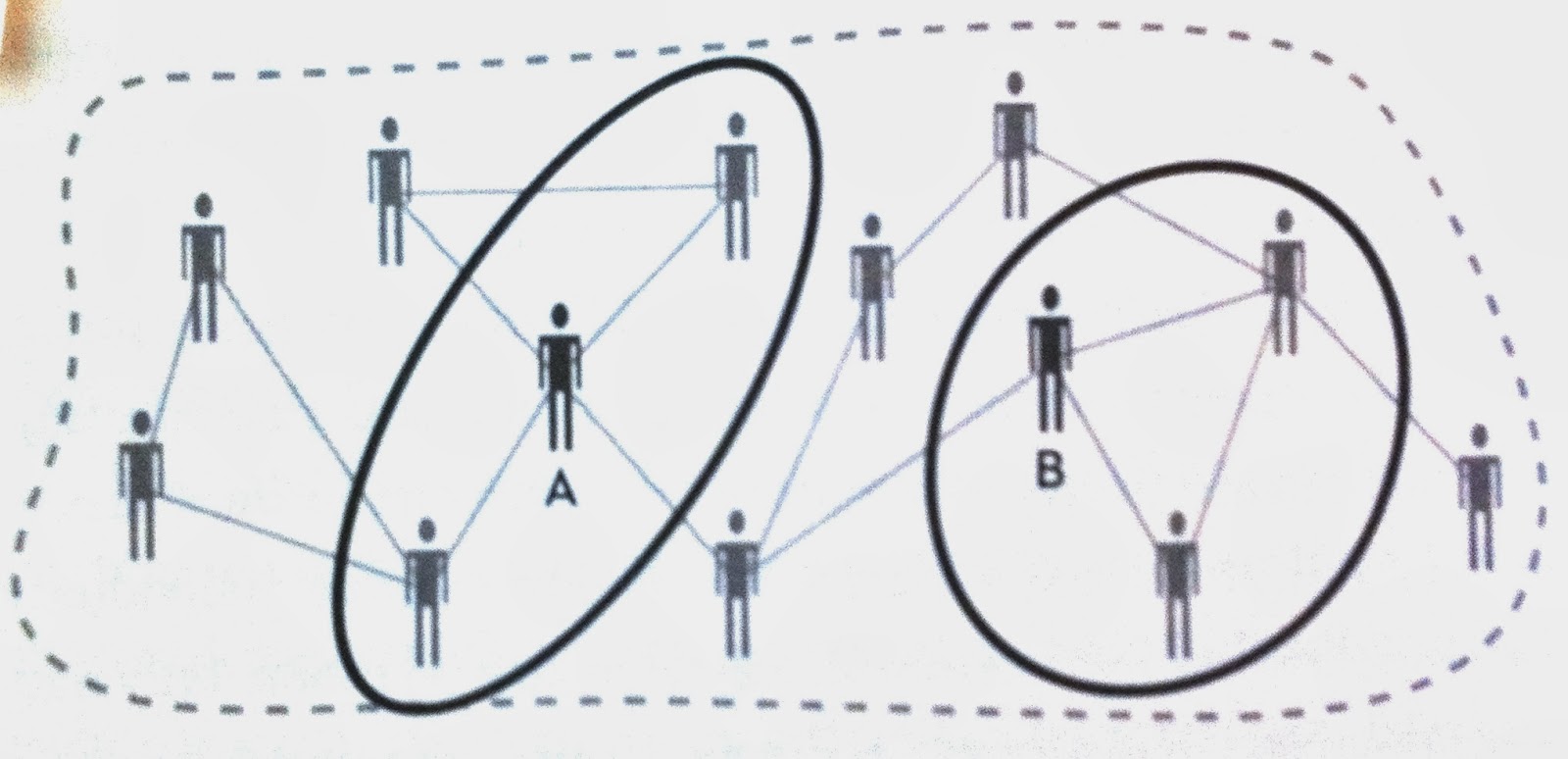
In this article I mentioned Alex Pentland's book Social Physics . One of the points frequently made in the book is that engagement , direct strong, positive interactions between people, within work groups is very important. By repeatedly interacting in cooperative manners, trust grows between team members and common beliefs, habits and norms emerge.

How intelligent groups discover and learn from new ideas

Image
In his new book Social Physics , MIT data scientist Alex Pentland introduces the discipline of social physics, a big data approach to social science. The discipline focuses mainly on how ideas flow through groups and communities and how social learning takes place to enable productivity and creativity. The book describes much large scale research and many core concepts of social physics and it introduces ideas on how groups, organizations, cities, and societies can be made more effective.

In praise of high-level cognitive control when performing complex tasks

Image
In Going from Good to Great with Complex Tasks , Ozgun Atasoy explains that the belief that consciously thinking about what we are doing, when performing complex tasks, by definition harms our performance, is wrong. It is true that some type of conscious thinking can harm our functioning. For example, when we are typing on a keyboard, we run largely on auto-pilot. If we would try to consciously control the typing of each separate letter, this would slow us down a great deal and probably cause us to make many mistakes.

Advantages of interest-focused development

Image
Soon, I will post an article in which I make a plea for interest-focused development. In that article I will explain what I mean with interest-focused development and what its advantages are for individuals and organizations. Here, I will give a preview of that article by mentioning the direct advantages of interest-focused development. When we are doing something which interests us, in other words, which we enjoy and find meaningful, we enter a psychological state of attentive engagement and we experience positive emotions. In this state we think more clearly, we comprehend things deeper and more easily and we remember better (Murphy Paul, 2013) due to which we learn more efficiently and better.