Posts

Showing posts with the label academic performance

The Role of Mindset and Motivation in the Academic Performance of First-Year Secondary School Students
Image
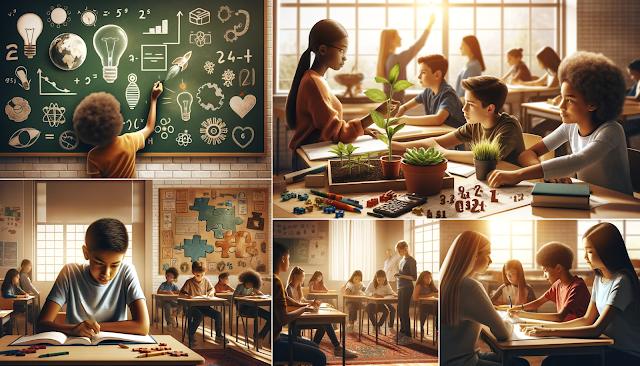
A recent study ( Boncquet et al., 2023 ) investigated the influence of mindset and motivation on the academic performance of first-year secondary school students (N=3415). This study focused on the quality of motivation according to self-determination theory and the mindset about intelligence following Carol Dweck's framework. The goal was to reveal the impact on learning outcomes such as engagement, learning strategies, and performance.

Growth mindset promotion through value alignment: better performance, less inequality

Image
Growth mindset promotion through value alignment can lead to better school performance and less inequality. Education is constantly looking for ways to improve the school performance of students. Another important goal is to reduce inequality in education. The challenge is to discover how we can achieve this in the most effective way. Recent research by three American researchers offers a possible solution. They developed an intervention aimed at promoting a growth mindset in students.

Childhood adversity: fixed mindset, academic performance, and internalizing symptoms

Image
Research has shown that two aspects of childhood adversity (threats and deprivation) are associated with two types of problems: low academic performance and internalizing symptoms. In a new study, Lucy Lurie et al. (2022) look at the role of mindset in this.

A growth mindset tempers the adverse effects of poverty on academic achievement

Image
Socioeconomic background is an important predictor of academic performance. The extent to which this is so varies by country but generally the following is true: people from lower socioeconomic backgrounds tend to perform less well in school than those from higher socioeconomic backgrounds. This is due to, among other things, the following factors: the lower the socioeconomic background of a people is, the more likely it is that they will face certain extra obstacles such as reduced access to educational resources, higher levels of stress, poorer nutrition, and reduced access to healthcare.