Posts

Showing posts with the label Interview

Interview with Judith Glück
Image
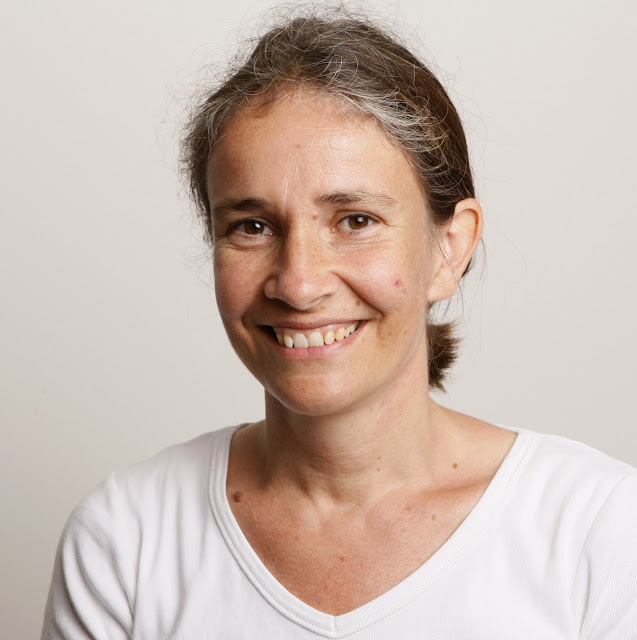
Judith Glück is a professor of developmental psychology at the University of Klagenfurt in Austria. She is one of the leading scholars in the emerging field of wisdom science. She started studying this topic 20 years ago where she worked with wisdom science pioneer Paul Baltes at the Max Planck Institute in Berlin. Her research has focused on how laypeople view wisdom, how wisdom develops, how it can be measured, on situational determinants of wisdom, and on the relationship between wisdom and values and intuitions. Together with her longtime collaborator Susan Bluck she introduced the MORE Life experience model of wisdom . In this interview I ask here about a variety of topics such as what wisdom science is, what wisdom itself is, why wisdom may now be more needed than ever in the world, and how wisdom science may contribute to progress in the world. Hi Judith, I think I read somewhere that people have written about wisdom practically since the invention of writing some 5000 years ...

Interview with Igor Grossmann

Image
Igor Grossmann was born in the Soviet Union, grew up in Ukraine and Germany, and studied in Germany and the USA. Currently, he is the director of the Wisdom and Culture Lab at the University of Waterloo, Canada. He is one of the leading researchers in the field of wisdom research (view his Google Scholar profile ). His work focuses on demystifying wisdom and modeling of cultural change. He also co-hosts the On Wisdom Podcas t and initiated worldaftercovid.info . In this interview we will talk about topics like what wisdom is, why there now appears to be an ever-greater call for wisdom, how individuals may reason and act more wisely, and how wisdom may be taught. 

Interview with Keith Stanovich (2016)

Image
The Rationality Quotient - Progress toward measuring rationality By Coert Visser I first interviewed Keith Stanovich , Professor Emeritus of Applied Psychology and Human Development at the University of Toronto, in 2009 . In that interview he explained the difference between intelligence and rationality and why rationality is very important. He also pointed out that IQ tests are incomplete measures of cognitive functioning because they do not measure rationality. Now, seven years later, I interview him about his new book, The Rationality Quotient , which he wrote together with his colleagues Richard West and Maggie Toplak , and which presents a prototype of a rational thinking test, the Comprehensive Assessment of Rational Thinking (CART).

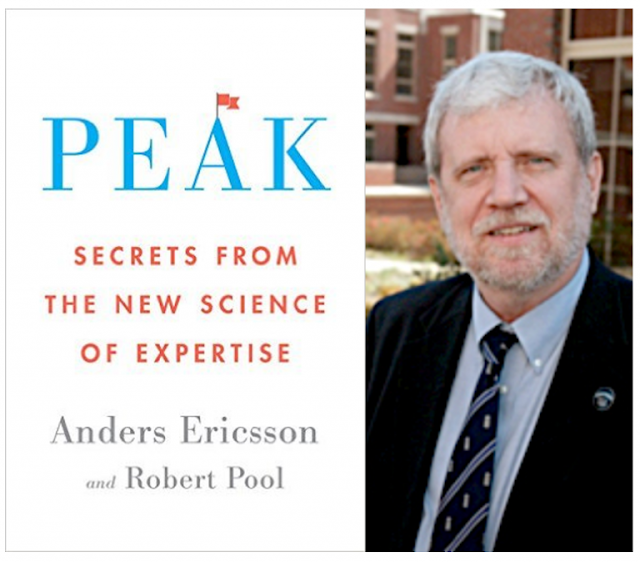
Interview with Anders Ericsson

Image
K. Anders Ericsson is a Swedish psychologist who is a professor at Florida State University. In the beginning of his career he worked with among other Nobel laureate Herbert Simon. He is recognized as the most prominent researcher in the area of expertise development. Together with his colleagues, he has done research into how experts in different areas have managed to reach the top of their fields. Uptil now he has mostly scientific publications. But now he and Robert Pool have published a popular book about expertise development: Secrets from the New Science of Expertise . Here is an interview with Ericsson about this new book. 

Interview with Claude Steele

Image
By Coert Visser (2010) Professor Claude Steele is a social psychologist and the Provost of Columbia University. He has written the book Whistling Vivaldi: And Other Clues to How Stereotypes Affect Us about the work he and his colleagues have done on a phenomenon called 'stereotype threat'. Stereotype threat is the tendency to expect, perceive, and be influenced by negative stereotypes about one’s social category, such as one’s age, sex, sexual orientation, ethnicity, profession, nationality, political affiliation, mental health status, and so on. Stereotype threat can be harmful by creating racial, gender, and social class achievements gaps in schools and in the workplace and tensions across group lines. In this interview Claude Steele explains, among other things, what stereotype threat is and what can be done about it. How would you explain in simple terms to people like teachers, managers, and policymakers what stereotype threat is and why it is important for them to ...

Interview with Wally Gingerich

Image
By Coert Visser (2010) Wallace Gingerich is Professor Emeritus of Social Work at the Mandel School of Applied Social Sciences, Case Western Reserve University, Cleveland, Ohio. As a core member of the Brief Family Therapy Center in Milwaukee (BFTC), Wisconsin, in the 1980s, he has been an important contributor to the development of the solution-focused approach. In this interview, he looks back on how and why he joined BFCT and on how the solution-focused approach emerged in the next few years after he joined. Also, he talks about the BRIEFER project and about a soon to be published review of the research on the effectiveness of the solution-focused approach. Finally, he reflects on the ways the solution-focused approach may further develop. Could you tell a bit about when and how you got involved with the Brief Family Therapy Center?